

Oil production in Brazil
Oil production in Brazil: pre-salt fields, Santos and Campos basins, Tupi, Búzios, Mero, production volumes, FPSO technology, and export strategy.
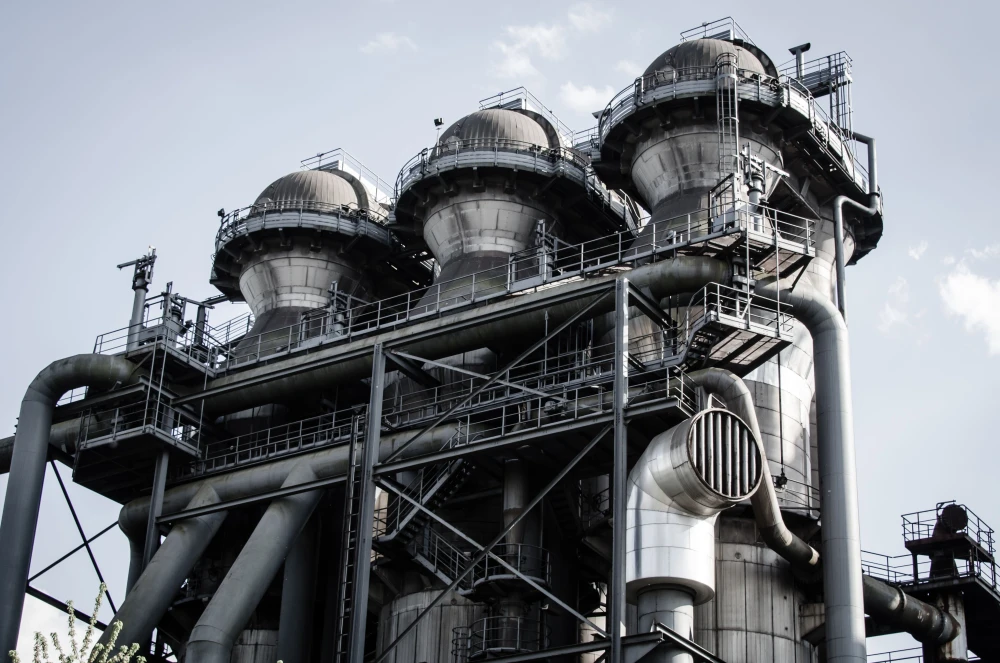
Brazil ranks among the world's largest oil-producing countries and in recent years has become one of the most prominent offshore projects on a global scale. The industry is anchored by deepwater and ultra-deepwater shelf fields, primarily in the Santos Basin, where the largest pré-sal assets are located — Tupi, Búzios, Mero, Sapinhoá, and Sepia. It is precisely the discovery and rapid development of the pré-sal that turned Brazil into a new type of oil power: one with a very high share of offshore production, an extensive FPSO network, and a continually growing export significance.
For the topic of "oil production in Brazil," it is especially important to understand that the country's growth is driven not by numerous small onshore fields but by a handful of ultra-productive offshore clusters. In 2024, almost 79% of all output already came from the pré-sal, and virtually all oil was produced offshore. Thus, the modern Brazilian oil industry is, above all, the Santos Basin, the Campos Basin, deepwater technologies, high-rate wells, and FPSO floating complexes — which have become the country's baseline production model.
Historical overview of the oil industry
Brazil's modern oil industry grew out of offshore development. In the 1970s, the Campos Basin became the key centre, where Petrobras gradually built one of the world's strongest schools of deepwater development. This phase made the country a global technology player in the offshore segment and laid the foundation for the subsequent ultra-deepwater breakthrough.
The decisive turning point came with the pré-sal discoveries in the 2000s. It became clear that beneath the salt layer off the Brazilian coast lay colossal resources capable of sharply reshaping the industry balance. That is precisely what happened: from the late 2000s and early 2010s, production began shifting rapidly toward the Santos Basin, and Brazil itself gradually became one of the fastest-growing major oil producers outside OPEC.
Today, Brazilian oil production is noteworthy not only for its scale but also for its engineering logic. This is neither the classic Middle Eastern onshore producer model nor the North American shale scheme. Brazil is an example of a country where production growth has been delivered by ultra-deepwater, highly productive pré-sal reservoirs, a strong role for Petrobras, and widespread use of FPSOs.
Geography of oil and gas basins and major fields
Brazil's principal oil geography is concentrated on the south-eastern offshore. The central role is played by the Santos Basin — the country's largest and fastest-growing oil district. Here lie the main pré-sal assets that underpin modern production growth. Petrobras states directly that the country's largest producing fields are located in the Santos Basin, and the pré-sal zone of the basin alone accounts for approximately 80% of the company's total oil and gas output.
Tupi is Brazil's largest field by current production and one of the symbols of the pré-sal. It is the pioneering asset around which the modern model of Brazilian deepwater production was largely shaped. In 2024, Tupi delivered approximately 779 thousand bbl/day and remained the leading oil producer on the Brazilian shelf. Reuters, citing ANP, also indicated that as of August 2024 Tupi was producing around 832,600 bbl/day.
Búzios is the second largest by output, but arguably the most powerful in terms of long-term potential. Petrobras calls it the world's largest ultra-deepwater field. In 2024, Búzios delivered around 639 thousand bbl/day, and by end-2025 it had reached a record daily production of 1 million barrels of oil. For Brazil, this is one of the most important facts of recent years: Búzios is regarded as the country's future leading producing asset.
Mero is another giant of the Santos Basin and, according to Petrobras, the world's third-largest pré-sal oil object after Búzios and Tupi. In 2024, Mero produced around 297 thousand bbl/day and was rapidly increasing its share in the national balance. For applied and educational texts, this is an important point: Brazil's growth now rests not on one or two assets but on an entire group of giant pré-sal fields.
Among other significant assets are Sapinhoá and Sepia in the Santos Basin, as well as Roncador, Marlim, and other fields in the Campos Basin. The Campos Basin remains a very important district: Petrobras estimates its contribution at nearly 20% of national oil and gas production. In addition, Brazil maintains production in the Espírito Santo, Potiguar, Recôncavo, and a number of other basins, but it is the south-eastern offshore that defines the country's modern oil profile.
Current production status in 2024–2025
According to official ANP data, in 2024 Brazil averaged 3.358 million bbl/day of crude oil and 4.322 million barrels of oil equivalent per day of combined oil and gas. This is only slightly below the record set in 2023, but the production mix continued to shift in favour of the pré-sal, which already accounted for an average of 78.29% of all output in BOE terms and approximately 2.6 million bbl/day of crude.
Even more significant is the fact that virtually all Brazilian oil is now produced offshore: 97.5% of all crude production in 2024 came from offshore fields. This makes Brazil one of the most pronounced offshore oil countries in the world. By comparison, onshore assets remain but now play primarily a regional and supplementary role.
In 2025, Brazil reached a new all-time production record. ANP recorded an average of 3.770 million bbl/day of crude and 4.897 million BOE/day in combined output. This means the country has not merely consolidated the pré-sal success but has entered a new phase of growth. This is precisely why Brazil is increasingly regarded as one of the main global non-OPEC drivers of medium-term supply growth.
Production technologies and operational characteristics
The technological base of Brazilian oil production is built around ultra-deepwater operations and FPSOs. Petrobras emphasises that FPSOs have become the most efficient and modern solution for the pré-sal: they allow oil to be produced, processed, stored, and offloaded at sea without a mandatory link to a shore-based pipeline. According to its own data, Petrobras is the world's largest FPSO operator.
The pré-sal demands high engineering precision. Wells operate at great depths, through complex salt formations, and in conditions where subsea infrastructure, drilling quality, tubular reliability, corrosion resistance, and precise reservoir monitoring are especially critical. At Búzios in 2025, new oil saturation was confirmed at a zone approximately 5,600 metres deep, illustrating the scale of depths and the geological complexity involved.
A distinct technological feature of Brazil is CO₂ management and the reduction of carbon intensity at the pré-sal. Petrobras indicates that an increasing number of its FPSOs are using CCUS and HiSep solutions for CO₂ separation and reinjection. This simultaneously boosts productivity and reduces emissions. According to the company, 23 pré-sal platforms are already equipped with carbon-reduction technologies.
Another strength is well productivity. The EIA noted that Petrobras was able to increase the productivity of pre-salt wells by approximately 30% compared with the early stage of this segment's development, while simultaneously reducing the number of wells and the time required to bring capacity online. For the industry, this is one of the most instructive cases of how technological progress directly transforms the economics of the barrel.
Export strategy and role in the global market
Brazil is increasingly oriented toward oil exports. In 2024, the country exported 637.3 million barrels, or approximately 1.7 million bbl/day — a 9.5% increase on 2023, with revenue reaching nearly US$45 billion. In the same year, crude oil became Brazil's largest export commodity by value, illustrating the changing role of the oil sector in the national economy.
Asia remains the primary market. In 2024, the Asia-Pacific region received 56.1% of Brazilian crude exports, Europe 24.5%, and North America 13.7%. By country, the largest buyer was China, which imported 280.7 million barrels, or 44% of all exported Brazilian crude. For Brazil, this is of great importance: Asian demand is becoming the key commercial driver of the entire offshore model.
In the global market, Brazil is of interest as a supplier of new offshore barrels from the pré-sal. Its growth is not subject to OPEC+ quotas, and the quality of assets in the Santos Basin makes long-term projects economically attractive even in a volatile price environment. This is precisely why international companies' interest in Brazilian offshore remains strong, and new licensing rounds and discoveries in the Santos and Campos basins continue to attract major players.
Challenges facing the industry
Brazil's primary challenge is its high dependence on offshore infrastructure and FPSOs. When almost all oil is produced at sea, the pace of floating complex commissioning, subsea system reliability, drilling rig availability, maritime logistics, and timely well tie-ins all become critical. This makes the industry very powerful, but also highly capital-intensive.
The second issue is the concentration of production across a handful of giant pré-sal clusters. Tupi, Búzios, Mero, Sapinhoá, and Sepia create a very powerful growth platform, but simultaneously increase the industry's dependence on platform start-up schedules, maintenance operations, and the pace of development of precisely these assets. The larger the share of a few mega-fields, the greater their influence on national statistics.
The third challenge relates to gas infrastructure and the long cycle of offshore investment. Some gas must be reinjected to sustain oil production, and new projects require the synchronous development of subsea systems, production processing, logistics, and export channels. For Brazil, this means that production growth is never just a question of reserves — it is also a question of the speed of engineering execution.
Development outlook
Brazil's prospects look very strong. The record already set in 2025 shows that the country is in a growth phase, not a stabilisation phase. The main drivers are Búzios, Tupi, Mero, and the further expansion of the pré-sal in the Santos Basin. Brazil has geology, an accumulated technology base, and a ready FPSO model that can be scaled up.
Additional potential is linked to new projects and exploration. In 2025, investors took a final investment decision on Gato do Mato in the Santos Basin, with a planned start-up via an FPSO of 120 thousand bbl/day capacity by 2029. Petrobras is also continuing drilling and exploration in new Santos Basin blocks, including Aram. This means that the pré-sal remains not only the current but also the future core of growth.
For students, analysts, and report authors, Brazil is particularly interesting as a case study of a country that succeeded in transforming deepwater production from an expensive technological niche into the mass foundation of a national oil sector. In this sense, the Brazilian oil industry is one of the most instructive examples of the global transformation of offshore production.
Conclusion
Brazil today is one of the world's strongest centres of offshore oil production. Its place in the market is defined not only by reserves but also by the quality of pré-sal assets, the high rate of FPSO commissioning, well productivity, and the growing export importance to Asia and Europe. The Santos Basin, Tupi, Búzios, and Mero form the foundation of the country's modern growth.
The principal conclusion on the topic of "oil production in Brazil" is that this is no longer simply a large Latin American oil country — it is one of the world leaders in deepwater and ultra-deepwater production. This is precisely why interest in Brazil is high among market participants, students, and those seeking facts, figures, and contemporary examples of oil industry development.
For drilling, field development, and oilfield operations projects, Burmetsnab supplies drill pipe, casing pipe, and tubing (NKT). Such tubular products are in demand wherever reliability, service life, and resistance to demanding drilling, production, and fluid-transport conditions are essential.
Need pipe for your project?
We will select pipe to match your specification and schedule. Price on request.