

Oil production in Canada
Oil production in Canada: oil sands in Alberta, Athabasca, Cold Lake, Peace River, bitumen extraction, Trans Mountain pipeline, production volumes and export.
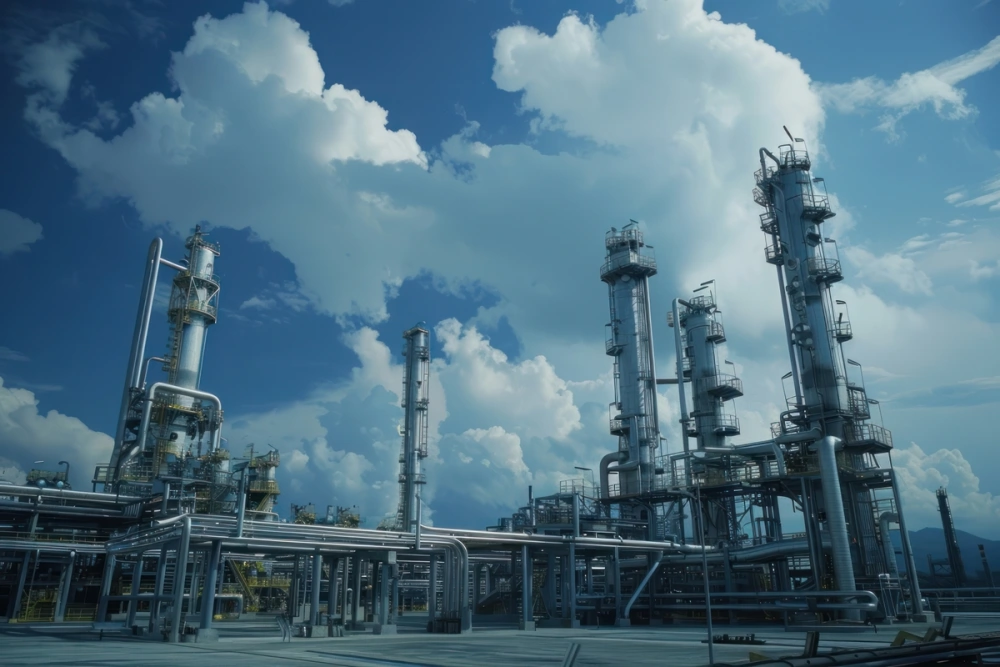
Canada ranks among the world's largest oil-producing countries and occupies a unique position in the heavy oil market thanks to Alberta's massive oil sands resource base. The bulk of the country's proven reserves is concentrated in the Athabasca, Cold Lake, and Peace River oil sands, and the industry's profile is defined by bitumen extraction, upgrading, blending with diluents, and export via pipelines to the USA and the Pacific coast.
The Canadian oil industry differs from Middle Eastern and classic conventional models. Production here is built not only on conventional fields but also on large mining and in situ projects in which steam-based thermal methods, upgraders, access to condensate, pipeline throughput capacity, and environmental requirements all play important roles. Accordingly, the Canadian industry must be evaluated through the lens of "oil sands – Alberta – pipelines – US export."
Historical overview of the oil industry
Canada's oil industry developed as part of the Western Canada Sedimentary Basin, but its modern scale is linked above all to the development of Alberta's oil sands. For a long time, production was built on conventional fields in Western Canada and offshore projects off Newfoundland and Labrador. However, as bituminous resources were developed, the sector's structure changed sharply: the country became one of the world's leaders in heavy oil and synthetic crude.
The key phase came when surface mining, upgrading, and in situ development technologies made large bitumen deposits commercially recoverable. It was then that Canada began increasing production faster than conventional fields alone would have permitted. As a result, the oil industry shifted increasingly toward northern Alberta, large integrated projects, and exports to the American market.
Today Canada's industry is a combination of mature conventional districts, offshore production in the Atlantic, and the dominant role of the oil sands. According to EIA, approximately 97% of the country's proven reserves are in oil sands, so the strategic future of the sector is directly tied to Alberta, bitumen, and the infrastructure for transporting it to refiners.
Geography of oil and gas basins and major fields
Canada's principal oil geography centres on the Western Canada Sedimentary Basin. Within it, Alberta is the absolute centre of gravity, accounting for approximately 84% of national production. Here lie the three largest oil sands zones: Athabasca, Cold Lake, and Peace River. These form the primary volume of reserves, bitumen production, upgrading, and pipeline flows for export.
Athabasca is the largest and best-known oil sands district. It hosts open-cut mining projects and large upgraders, including areas around Fort McMurray. This is the core of the mining segment, where bitumen is extracted by open-pit methods, then separated, transported, and, where necessary, upgraded to synthetic crude oil. Cold Lake and Peace River are more associated with in situ development, where deposits lie too deep for open-pit mining.
In addition to the oil sands, Saskatchewan's conventional districts and certain offshore projects off Newfoundland and Labrador play a notable role. But in terms of the country's overall oil balance, it is Alberta's heavy resources that are decisive. Canada's largest assets are therefore not a single giant conventional field of the Middle Eastern type, but a collection of large mining and in situ projects such as Kearl, Horizon, Syncrude, Christina Lake, Foster Creek, Cold Lake, and other bitumen production centres.
Current production status in 2024–2025
Canada set a new production record in 2024. According to the Canada Energy Regulator, the average reached approximately 5.13 million bbl/day of crude oil and equivalents, compared with 4.93 million bbl/day in 2023. In the broader petroleum and other liquids count, the country was already around 5.8 million bbl/day in 2023. The difference reflects the methodology used, but the overall picture is unambiguous: Canada is in the global group of leaders in liquids production.
The primary increase was delivered by Alberta, above all the non-upgraded bitumen segment and large oil sands projects. According to CER estimates, it was growth in Alberta that made the largest contribution to the 2024 record. This shows that the oil sands remain the main driver of Canadian upstream, not a secondary supplement to conventional output.
Also significant is the fact that the current growth is closely linked to transport infrastructure. While pipelines were congested, part of the productive potential was effectively constrained by evacuation. Following the start-up of the expanded Trans Mountain pipeline in May 2024, the system became more flexible: some flows gained access to the Pacific coast, and Western Canada's internal pipeline network became less congested. For the Canadian industry, this is not a local news item but a factor that directly affects the ability to sustain high production.
Production technologies and operational characteristics
Canada's oil production is technologically heavily dependent on the oil sands. Two basic approaches are officially used: surface mining and in situ. Open-cut mining is employed where bitumen is located comparatively close to the surface. In situ is used for deeper deposits and relies on thermal methods in which viscous bitumen is heated and becomes recoverable. The in situ segment largely defines the current production growth, because the bulk of reserves is too deep for open-pit operations.
After extraction, bitumen often needs either to be upgraded to synthetic crude oil or blended with diluents — condensate and pentanes — so that the crude can be transported by pipeline. This is one of the key features of the Canadian industry: what matters here is not only extraction as such but the entire chain of preparing heavy oil for transport. Without access to diluent supply and without reliable midstream infrastructure, production growth quickly runs up against constraints.
At the same time, the industry is working to reduce costs and carbon intensity. According to the Government of Alberta, the emissions intensity of bitumen production in the oil sands fell by 26% per barrel between 2012 and 2023, even as total output grew by 96%. For Canada, this is an important argument in favour of oil sands modernisation, but it does not alter the fact that bitumen production remains more energy-intensive and infrastructure-intensive than conventional oil.
Export strategy and role in the global market
Export is the foundation of the Canadian oil model. In 2024, the country exported approximately 4.2 million bbl/day of crude, of which 95.7% went to the USA. In essence, Canada is integrated into the North American supply system: its heavy and synthetic grades go to Midwest and Gulf Coast refineries that have appropriate processing configurations and steady demand for such barrels.
Pipelines play the central role in evacuation. EIA identifies four main export lines: Enbridge Mainline, Keystone, Trans Mountain, and Express. Enbridge Mainline carries the primary flow of Canadian oil south, while the start-up of the expanded Trans Mountain in May 2024 increased access to tidewater and external markets via British Columbia. For Canada, this is strategically important: the more alternatives there are to the US destination, the greater the price resilience and the lower the dependence on domestic route congestion.
In the global market, Canada plays the role of the largest supplier of heavy oil to the USA and one of the largest producers outside OPEC. At the same time, the export profile remains less diversified than that of Middle Eastern players: the US market still absorbs almost the entire Canadian stream. This provides sales stability but creates a high dependence on American refining infrastructure and the conjuncture of North American processing.
Challenges facing the industry
Canada's primary challenge is the combination of a high resource endowment and a complex production model. Oil sands require large capital expenditures, access to water and energy, tailings disposal systems, diluent supplies, reliable upgraders, and a powerful pipeline network. This makes the sector resilient over the long horizon but less flexible compared with conventional projects.
The second cluster of questions relates to environmental constraints. For Canada, carbon intensity, water use, tailings ponds issues, reclamation, and public acceptability of new projects and pipelines are all important. Even when production grows, each expansion is increasingly evaluated through the lens of emissions, environmental footprint, and regulatory requirements.
The third challenge is transportation. Despite the commissioning of new capacity, the pipeline topic remains systemic for Canada. If production growth outpaces infrastructure commissioning, a discount on heavy grades emerges, evacuation constraints intensify, and part of the potential margin is lost. For the industry, this is no less important a question than reservoir quality or well flow rate.
Development outlook
Canada's prospects are linked above all to the continued development of Alberta and the oil sands. A vast resource base, mature production clusters, accumulated expertise in mining and in situ, and integration with the American market give the industry a solid foundation. In the coming years, the country will retain its position as one of the world's largest heavy oil producers.
The primary growth driver will be improved efficiency of existing projects, not the launch of dozens of new mega-projects. Companies will seek to expand production through debottlenecking, in situ optimisation, improved thermal schemes, cost reduction, and more effective use of existing infrastructure. Following the start-up of the expanded Trans Mountain, such solutions make stronger economic sense.
Further growth will depend, however, on how successfully the balance is maintained between exports, environmental requirements, and pipeline access. For Canada, this balance is insufficient on paper — it must be confirmed by real pipeline throughput capacity, diluent prices, and the resilience of heavy oil demand in the USA and beyond.
Conclusion
Canada is one of the few countries where the oil industry is built around a vast oil sands base and the world's largest heavy resources. Alberta, Athabasca, Cold Lake, and Peace River define almost the entire industry profile, and bitumen extraction, upgrading, blending with diluents, and pipeline export form its production logic.
The strengths of the Canadian sector are vast reserves, a high level of technological maturity, and a stable market in the USA. The weaknesses are capital intensity, environmental constraints, and dependence on pipeline infrastructure. It is precisely this combination of factors that will determine how Canadian oil production develops in the coming years.
For drilling, field development, and oilfield operations projects, Burmetsnab supplies drill pipe, casing pipe, and tubing (NKT). This helps equip field and well projects with tubular products suited to actual production, workover, and crude-transport conditions.
Need pipe for your project?
We will select pipe to match your specification and schedule. Price on request.