

Oil production in Iran
Oil production in Iran: proven reserves of 208.6 billion barrels, Ahvaz, Marun, Gachsaran, South Pars, NIOC, production volumes and development outlook.
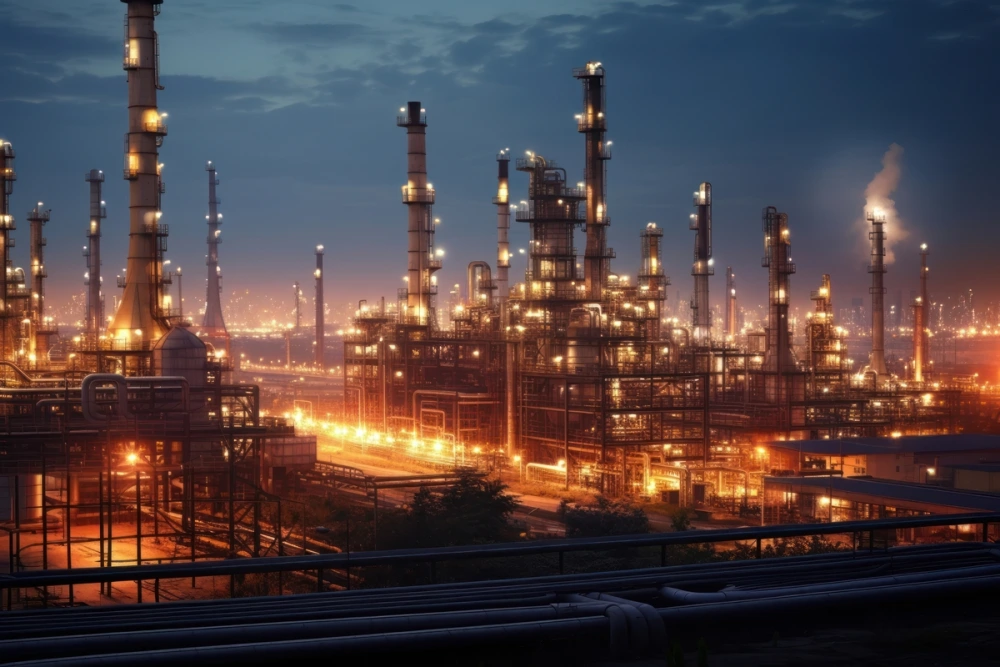
Iran holds the world's third-largest proven oil reserves — approximately 208.6 billion barrels. Actual production, however, is substantially below the resource potential: in 2024, total liquids production was estimated at approximately 4.6 million barrels per day, of which around 2.9–3.2 million barrels per day was crude oil. The principal paradox of the Iranian industry is the combination of a colossal resource base with technological and sanctions-related constraints that restrain field development and exports.
Historical overview of the oil industry
Commercial oil production in Iran began in 1908 with the discovery of the Masjid-i-Suleiman field in Khuzestan Province. This event was one of the pivotal moments in the history of the global oil industry. The British Anglo-Persian Oil Company (APOC) — later a predecessor of BP — soon gained effective control over the sector and built a major refining complex at Abadan.
In the 20th century, Iranian oil became not only an economic but also a political factor. In 1951, the oil industry was nationalised under Prime Minister Mohammad Mosaddegh. Following the events of 1953 and a change in political course, foreign influence partially returned, but the Islamic Revolution of 1979 led to final nationalisation and the formation of the National Iranian Oil Company (NIOC) as the principal state operator. The war with Iraq in 1980–1988 caused severe damage to infrastructure and sharply reduced output.
The contemporary stage of Iran's oil industry development is defined above all by the cyclical impact of international sanctions, which restrict investment, technology supplies, cargo insurance, and access to global financial markets.
Geography of oil and gas basins and major fields
Iran's main oil and gas resources are concentrated in the south-west of the country, primarily in the Zagros region and along the Persian Gulf coast. This is the principal production centre, where the largest Iranian fields and export infrastructure are located.
- Ahvaz — Iran's largest oil field, producing approximately 750 thousand barrels per day.
- Marun — one of the key fields of the south-west, producing approximately 520 thousand barrels per day.
- Gachsaran — a mature field with high-sulphur crude, producing around 200 thousand barrels per day.
- Iranian Shelf — a prospective offshore production zone with assets such as Soroush and Nowruz.
South Pars holds special significance — the world's largest gas-condensate field, shared between Iran and Qatar. The Iranian portion contains approximately 14 trillion m³ of gas and approximately 18 billion barrels of condensate. This project has not only an energy but also a geopolitical dimension for the entire country.
Current production status in 2023–2024
In 2024, Iran's total liquids production was estimated at approximately 4.6 million barrels per day, including condensate. Crude oil output alone was approximately 2.9–3.2 million barrels per day. This is noticeably above the crisis levels of 2020 but still below the country's production potential.
By proven reserves, Iran ranks in the global top three, yet by actual production it operates well below the achievable level. This gap is explained not by the resource base but by restricted access to modern technologies, services, and international investment.
- Proven oil reserves — approximately 208.6 billion barrels
- Daily liquids production — approximately 4.6 million barrels
- Crude oil — approximately 2.9–3.2 million barrels per day
- Estimated reserve life — approximately 290 years at the current production rate
Production technologies and operational characteristics
The technological level of Iranian oil production is uneven. At some mature fields, a traditional operating model is applied with a limited degree of modernisation, while the development of new and complex assets requires access to more advanced equipment and engineering solutions.
- Drilling at mature fields with a high degree of depletion
- Need to improve oil recovery factors
- Limited access to modern offshore and HPHT technologies
- Shortage of compressor and pump equipment for gas-condensate projects
- Need to modernise the drilling and oilfield services fleet
For assets such as South Pars and the Persian Gulf fields, tubular solutions resistant to aggressive environments, corrosive conditions, and demanding operating regimes are especially important. Restricted access to Western equipment makes import substitution and alternative supply particularly pressing.
Export strategy and OPEC role
Iran remains an important OPEC member, but its actual market role is constrained by the sanctions regime. Formally, the country has the potential for higher production and exports; in practice, supplies often move through complex arrangements, with limitations on insurance, settlements, and shipping.
Iran's export infrastructure centres on Persian Gulf terminals, primarily Kharg Island. In a normalised external environment, the country could relatively quickly increase production and materially influence the global oil supply balance.
Challenges facing the industry
The key challenges of the Iranian oil industry today are primarily of a foreign-policy and technological nature.
- US sanctions and restricted access to the global financial system
- Bans and restrictions on equipment and services supply
- Lack of investment in infrastructure modernisation
- Wear and deterioration of equipment at mature fields
- Environmental risks and associated-gas losses
- Difficulties with long-term planning of export deliveries
In essence, Iran's fundamental problem is that the country's resource base is considerably stronger than its current operational and financial capacity to develop those resources.
Development outlook
Under a relaxation or lifting of sanctions, Iran would be capable of materially increasing production within a few years and returning to a stronger position on the global market. The growth potential is assessed as very high, through the restoration of mothballed capacity, modernisation of legacy fields, and development of South Pars.
Key development directions include:
- Production growth at mature oil fields through enhanced oil recovery methods
- Modernisation of export infrastructure
- Development of Persian Gulf projects
- Attracting investment through models such as IPC (Iran Petroleum Contract)
- Expansion of technology cooperation with friendly countries
Conclusion
Iran remains one of the most underestimated and simultaneously most significant players in the global oil market. Vast reserves, a strategic location, and established basic infrastructure give the country a powerful growth potential; however, sanctions and technological isolation prevent it from fully realising these advantages. Should the external political environment change, Iran would be capable of rapidly strengthening its influence in the global oil market.
For drilling, oilfield infrastructure modernisation, and operations in complex environments, Burmetsnab supplies drill pipe, casing pipe, and tubing (NKT) for oil and gas enterprises.
Need pipe for your project?
We will select pipe to match your specification and schedule. Price on request.