

Oil production in Kazakhstan
Oil production in Kazakhstan: Tengiz, Kashagan, Karachaganak fields, CPC pipeline export, production volumes and development prospects.
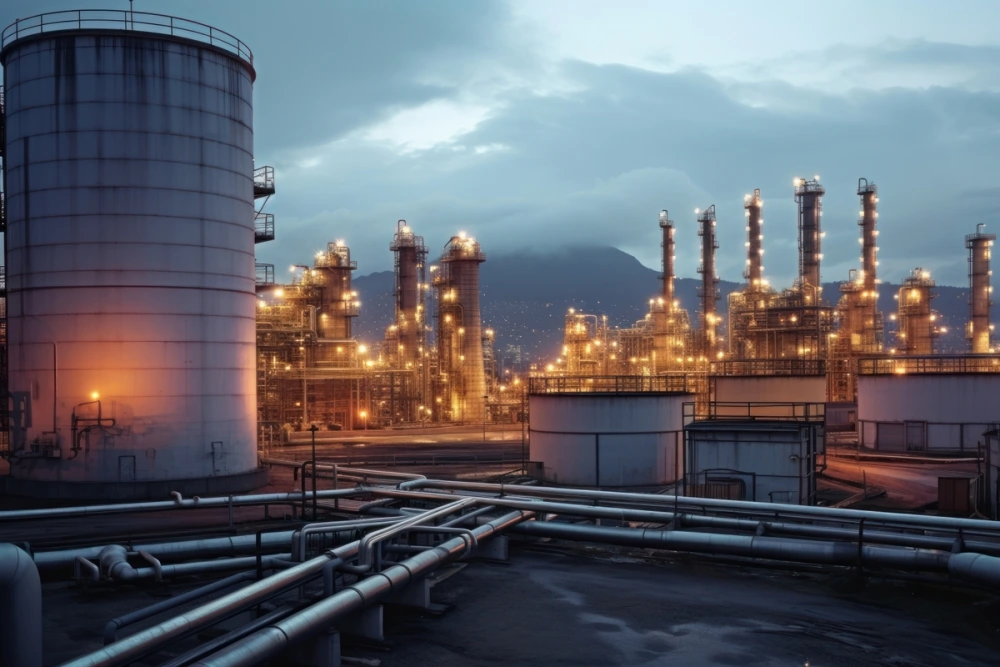
Kazakhstan ranks among the largest oil-producing countries in Eurasia and remains a key crude exporter in the Caspian region. The country's oil industry rests on several giant assets — Tengiz, Kashagan, and Karachaganak — which deliver the bulk of production, foreign-exchange revenue, and investment activity. For Kazakhstan, not only reserves and well flow rates matter, but also the evacuation route: a significant share of export crude moves through the CPC system, so logistics directly affect the stability of the entire industry.
For those seeking facts on the topic of "oil production in Kazakhstan," two characteristics are important. First, statistics separately count crude oil, oil with condensate, and all liquid hydrocarbons, so figures from different sources may differ. Second, the modern profile of Kazakh oil production is defined not by dozens of equal-sized fields but by a high concentration of output at a handful of world-class projects using complex drilling technologies, gas injection, sour-oil processing, and offshore production on the Caspian Sea.
Historical overview of the oil industry
Kazakhstan's oil industry is historically associated with the west of the country — the Emba, Mangyshlak, and Caspian districts. During the Soviet period, basic field and transport infrastructure was created here, and the republic became an important part of the USSR's oil complex. Even then it was clear that the main potential lay not only in older onshore fields but also in larger and more complex structures of the Pre-Caspian Basin.
After independence, the industry transitioned to a model of large international consortia. This enabled Kazakhstan to bring the largest projects to a commercial stage — Tengiz, Karachaganak, and later Kashagan. For the country, this was a fundamental shift: oil production began to be built around capital-intensive fields with a high technology threshold, not only around mature Soviet-era assets.
The modern role of the sector in Kazakhstan's economy is very large. Oil and gas condensate form a significant share of exports, provide loading for refining, transport infrastructure, and a large segment of oilfield services. At the same time, Kazakhstan's oil sector is instructive for both academic and practical purposes: it combines three production models — mature onshore fields, giant high-sulphur onshore projects, and complex offshore development in the North Caspian.
Geography of oil and gas basins and major fields
Kazakhstan's main oil district is the west of the country. Here is the Pre-Caspian oil and gas basin, the northern part of the Caspian Sea, and the main export nodes. The bulk of commercial value is concentrated in a handful of major projects rather than distributed evenly across regions.
Tengiz is Kazakhstan's largest onshore oil field and one of the most complex projects by crude composition and operating conditions. In 2024, its production was approximately 606 thousand bbl/day. The field is known for its high sulphur content, high reservoir pressure, and complex oil and gas treatment infrastructure. For students and text authors: Reuters and Chevron class Tengiz among the deepest and technologically most complex large fields in the world. It is here that one of the largest oil projects in recent years — the Tengiz Future Growth Project — has been implemented.
Kashagan is located in the northern part of the Caspian Sea. It is the largest known field outside the Middle East and one of the largest discoveries of recent decades. Its recoverable reserves are estimated at approximately 7–13 billion barrels. In 2024, Kashagan produced approximately 378,500 bbl/day. The project is complex due to shallow water, ice conditions, high pressure, hydrogen sulphide, and the need to locate part of the infrastructure on artificial islands.
Karachaganak is a major gas-condensate project in West Kazakhstan Region. In 2024, it delivered approximately 263 thousand bbl/day of liquids. This field is especially significant because oil production here is closely linked to gas processing, gas reinjection, and external infrastructure including the Orenburg gas-processing complex. For the industry, it is a good example of how oil production can depend not only on a well stock but on the gas-handling chain.
In addition to the giants, fields in the Mangistau Region — Uzen, Zhetybai, Kalamkas, Karazhanbasmunai — as well as assets of the Turgai Basin, retain an important role. They do not deliver the economies of scale of Tengiz or Kashagan, but they underpin steady regional production, processing, and loading of field infrastructure.
Current production status in 2024–2025
In 2024, Kazakhstan produced approximately 1.9 million bbl/day of liquids. Taking crude oil alone, without gas condensate, the estimate was closer to 1.5 million bbl/day. This distinction is fundamentally important: it is the reason for frequent discrepancies between publications on Kazakh oil production in international statistics. Academic papers and analytical texts should correctly indicate which metric is being used.
At the field level, the picture was highly concentrated: Tengiz contributed approximately 606 thousand bbl/day, Kashagan approximately 378,500 bbl/day, and Karachaganak approximately 263 thousand bbl/day. These three projects alone form the core of production. Consequently, any maintenance operations, technical constraints, accidents, weather events, or export disruptions at any of these nodes are quickly reflected in national statistics as a whole.
In 2025, Tengiz became the primary growth driver. Chevron and Tengizchevroil announced first oil under the Future Growth Project; the project is intended to add approximately 260 thousand bbl/day and to bring the field to approximately 1 million BOE/day. This is one of the most notable industry developments in Kazakhstan in recent years, as Tengiz is expanding the country's production potential faster than any other asset.
At the same time, Kazakhstan has had to balance production expansion against OPEC+ commitments. In 2025, the country exceeded its crude quota on several occasions, primarily due to the ramp-up at Tengiz. For the real sector, this means the country's production capabilities are already growing, but their actual realisation depends not only on geology and engineering but also on the external regulatory regime for production.
Production technologies and operational characteristics
Kazakhstan's technological specifics are determined by crude quality and the geology of the largest assets. At Tengiz, the main complexity is associated with high sulphur and hydrogen sulphide content, reservoir depth, and the need for complex product treatment. Corrosion resistance of equipment, tubular reliability, pressure control systems, and modern gas treatment are critical here.
Kashagan represents a distinct category of complexity. Production is conducted in the shallow offshore of the North Caspian, where ice conditions, high reservoir pressure, a toxic environment, and marine logistics constraints must all be accounted for. A key fact: Kashagan is frequently cited as one of the most expensive and technologically complex offshore projects of the 21st century. For engineering and academic materials, this is one of the best examples of how the combination of geology and climate sharply increases the cost per barrel.
At Karachaganak, gas reinjection is of great importance, as it is indispensable for sustainably maintaining liquids production. This is a typical example of a field where oil, gas, and condensate cannot be treated independently. At the mature fields of Mangistau and the Pre-Caspian, reservoir pressure maintenance methods, well workovers, side-track drilling, and production stabilisation measures at depleted zones are widely applied.
Export strategy and role in the global market
Kazakhstan is oriented primarily toward exports, since the domestic market is incomparably smaller than production. The key route is the Caspian Pipeline Consortium system — approximately 1,500 km of pipeline to the Black Sea terminal, through which more than 80% of Kazakh crude exports move. For the global market, CPC is important not only as a Kazakh channel but as infrastructure handling more than 1% of global oil supply.
Due to this dependence, Kazakhstan is actively developing alternatives: shipments via the Atyrau–Samara route, routes via Aktau and the Caspian with onward connection to the Baku–Tbilisi–Ceyhan line, and exports to China. But none of these matches CPC in scale and economics, so export resilience remains a practical rather than theoretical issue for Kazakhstan.
In the global market, Kazakhstan is important as a supplier of the quality export blend CPC Blend, which is in demand among refiners for its good light-product yields. For European, Mediterranean, and some Asian buyers, Kazakh crude remains a notable grade, and Tengiz's growth is reinforcing the country's position as one of the largest exporters outside the Middle East.
Challenges facing the industry
The first systemic challenge is the high concentration of production. When the lion's share of national output depends on three projects, industry resilience decreases: downtime at Tengiz, constraints at Kashagan, or gas problems at Karachaganak are quickly reflected in the country's statistics as a whole.
The second challenge is logistics. Kazakhstan has large reserves and a strong production base, but its export model remains heavily tied to one main corridor. For the country, this means dependence on the technical condition of the pipeline system, sea shipment, and the overall stability of the route.
The third issue is the maturity of some onshore assets and the growing per-unit complexity of production. At older fields, more intensive work is constantly required to manage water cuts, flow rates, well workovers, and additional capital expenditures. This raises the significance of oilfield services, drilling programmes, and reliable tubular products.
Development outlook
The main source of growth in Kazakhstan in the coming years is Tengiz expansion. If the Future Growth Project operates at its design rate, the country will be able to maintain a higher production level even amid fluctuations at other large assets. Kashagan also retains potential for further growth, and for Karachaganak, expansion projects and improved gas infrastructure efficiency are important.
Kazakhstan's medium-term production outlook looks strong precisely because of the combination of a large resource base and already-established production infrastructure. But further growth will depend not only on the fields but also on route diversification, export balance compliance, and the industry's ability to service increasingly complex technological chains.
For academic and applied materials, Kazakhstan is also of interest as one of the few countries where the largest production growth sources are simultaneously linked to an onshore giant, an offshore project, and a gas-condensate field. This combination makes the country's oil system particularly instructive for comparing different field development models.
Conclusion
Kazakhstan holds a firm position in global oil production thanks to large reserves, a strong export orientation, and several world-class fields. Tengiz, Kashagan, and Karachaganak form the backbone of the industry, and the CPC pipeline remains the main arterial export route. It is precisely this combination of factors that defines the country's current market role.
Viewing Kazakhstan not only as a raw-material supplier but as an engineering oil system, its principal characteristics are high production concentration, complex technological conditions, and a close link between production and transport. Interest in the topic of "oil production in Kazakhstan" is therefore justified not only for search queries, but also for students, analysts, and industry text authors.
For drilling, well development, and operations projects, Burmetsnab supplies drill pipe, casing pipe, and tubing (NKT). Such tubular products are in demand at oil and gas facilities where reliability, service life, and resistance to demanding production and transport conditions are essential.
Need pipe for your project?
We will select pipe to match your specification and schedule. Price on request.