

Oil production in Kuwait
Oil production in Kuwait: Greater Burgan, Ratqa, Jurassic fields, KOC, KPC, production capacity, OPEC+ quotas and development prospects.
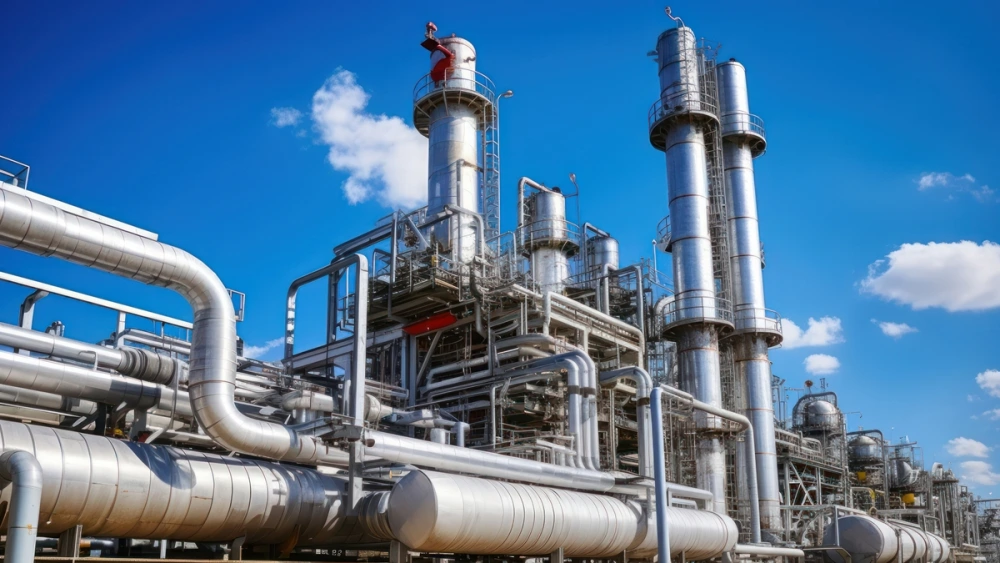
Kuwait is one of the classic oil powers of the Middle East, where the industry is built around a vast resource base, a strong export orientation, and the dominant role of the national companies KPC and KOC. The bulk of production comes from the south-eastern oil belt, above all from Greater Burgan, and the country's key role in the global market is defined by the combination of large reserves, steady exports to Asia, and the ability to increase capacity when OPEC+ quotas change.
For the topic of "oil production in Kuwait," it is important to recognise that the country has long moved beyond a single development model. In addition to the mature Burgan, the northern heavy-oil projects of Ratqa and Umm Niqa, Jurassic light oil, production in the Partitioned Neutral Zone with Saudi Arabia, and the first commercial offshore discoveries are all gaining in significance. The Kuwaiti oil industry today is therefore a combination of a classic giant, mature fields, and more complex new-generation technology projects.
Historical overview of the oil industry
Kuwait's modern oil history began with the discovery of Burgan in 1938. This field placed the country among the world's largest players in the global oil market. Kuwait shipped its first crude export cargo in 1946, and since then the oil sector has become the principal foundation of the economy, budget, and foreign trade.
For decades, the industry was built around the southern and south-eastern fields, primarily Greater Burgan. But as the main assets matured, Kuwait began more actively developing new directions: northern heavy resources, Jurassic light oil, the Neutral Zone, refining modernisation, and more technologically advanced production-maintenance methods. This gradually changed the structure of the industry: from a model centred on one dominant giant to a more complex portfolio of assets and projects.
A historically important feature of Kuwait is that it combines a very large resource base with a compact geography. For the industry, this provides a serious advantage: production, oil treatment, exports, and refining are within a relatively small territory, which simplifies logistics but simultaneously amplifies the significance of each large field and each infrastructure node.
Geography of oil and gas basins and major fields
Kuwait's oil production geography divides into several key zones. The principal zone is the south-east of the country, where Greater Burgan is located, comprising Burgan, Magwa, and Ahmadi. According to Kuwait Oil Company, this is the world's largest sandstone oil field and the second-largest oil field in the world. The bulk of Kuwaiti production and the country's historical export profile rest on this node.
Burgan is the unchallenged centre of Kuwait's oil industry. It is not simply a large field but a system of mature, highly productive reservoirs that have determined the country's oil balance for decades. The main export grade Kuwait Export Crude is substantially associated with flows from the southern fields and their blending at central treatment facilities.
The second important block is northern Kuwait. Here are the heavy-oil projects Ratqa and Umm Niqa, as well as districts associated with Lower Fars. It is here that Kuwait is developing heavy oil, making the industry far more technologically complex than the image of a classic Middle Eastern producer might suggest. Separately, there is the group of northern Jurassic projects, where light oil and gas are produced from deep, high-pressure reservoirs. EIA notes that since 2018 Kuwait has been exporting a super light oil grade from Jurassic fields, as well as a heavy crude grade from Ratqa and Umm Naqa.
The third important element is the Partitioned Neutral Zone with Saudi Arabia. After the restart in 2020, production at Wafra and Al-Khafji again became a significant part of the overall picture. In 2022, PNZ production reached approximately 300 thousand bbl/day, with Kuwait and Saudi Arabia sharing volumes and revenues equally. For Kuwait, this is an important reserve both in terms of barrels and in terms of the flexibility of the production system.
Finally, in 2024–2025 Kuwait received its first major offshore news. KOC announced a commercial discovery at Nokhatha with a resource estimate of approximately 2.1 billion barrels of light crude and 5.1 trillion cubic feet of gas, as well as the discovery of Julaiah with an estimate of approximately 800 million barrels of medium crude and 600 billion cubic feet of gas. For the Kuwaiti industry, this is especially interesting: a country long perceived as an almost entirely onshore producer has begun forming an offshore direction.
Current production status in 2024–2025
Kuwait has in recent years produced less than its technical potential. This is linked not to a shortage of reserves but to OPEC+ constraints and the long task of restoring production capacity after the decline in the late 2010s. The operational range for 2024–2025 saw actual crude output at approximately 2.5–2.6 million bbl/day, while in September 2025 the Minister of Oil estimated available capacity at 3.2 million bbl/day.
The distinction between production and capacity is fundamentally important for Kuwait. From a market perspective, the country looks like a medium-scale producer under current quotas, but as a considerably stronger player by actual production potential. This is precisely why Kuwait remains one of those OPEC members whose role is determined not only by actual deliveries but also by the ability to add volume when the cartel's policy changes.
For the internal structure of the industry, another figure is also important: according to KOC, in financial year 2024/2025, heavy oil production reached a record 95 thousand bbl/day. This shows that the northern heavy-oil projects are ceasing to be merely a prospect and are increasingly influencing the country's production profile.
Production technologies and operational characteristics
Kuwait's oil production technology base is heterogeneous. At the southern mature fields, primarily in Greater Burgan, the main task is maintaining production at the ageing giant. To this end, Kuwait Oil Company uses EOR approaches, builds gathering centres, water injection systems, and chemical enhancement programmes. This is the normal logic for a mature supergiant field: the principal engineering task here is not to "launch production" but to sustain it and slow natural decline.
Technology in the north of the country is different. Heavy oil in Lower Fars and Ratqa requires more complex solutions, including thermal methods and specialised infrastructure. Even in the early project phases, production of around 60 thousand bbl/day was planned, and KOC subsequently pointed directly to targets of hundreds of thousands of barrels per day for heavy oil over a longer horizon. For Kuwait, this is an important transition: heavy oil inevitably requires more capital, heat, water, and engineering oversight than classic light oil from Burgan.
A separate technology topic is the Jurassic reservoirs of northern Kuwait. These are deep, high-pressure, high-temperature light-oil and gas accumulations. KOC has been developing digital solutions, remote monitoring, and digital oilfield approaches here. For educational materials, this is a useful contrast: within one country, the mature giant Burgan, heavy oil from Lower Fars, and complex deep Jurassic reservoirs all operate simultaneously.
Export strategy and role in the global market
Kuwait's oil model is export-oriented. According to EIA, crude oil and condensate exports held at approximately 1.9 million bbl/day from 2020, with the overwhelming majority of deliveries going to Asia. China's share in Kuwait's crude exports grew from approximately 9% in 2013 to 31% in 2022. The USA, conversely, has reduced its significance as a buyer of Kuwaiti crude.
Kuwait's export basket has become more diverse. Historically, the country was associated primarily with Kuwait Export Crude, but now it also offers super light oil from the northern Jurassic fields and heavy crude from Ratqa/Umm Naqa. This increases marketing flexibility and allows better servicing of different refinery configurations.
At the same time, Kuwait's export strategy no longer reduces to simply shipping crude. After the modernisation of Mina Al-Ahmadi and Mina Abdullah under the Clean Fuels Project and the commissioning of Al Zour, the country has sharply strengthened its downstream. EIA indicated that total refining capacity grew to approximately 1.4 million bbl/day, and the export structure increasingly includes diesel, jet fuel, naphtha, and LPG. For Kuwait, this represents a gradual transition from a pure crude-exporter model to a more balanced system of "production + refining + products export."
Challenges facing the industry
Kuwait's primary challenge is Burgan's maturity. The country remains very strongly dependent on the south-eastern production core, and any major mature field requires ever-greater effort to sustain pressure, manage water cuts, work over wells, and build new treatment facilities. Even with vast reserves, therefore, the task of sustaining productivity remains technically complex.
The second challenge is the need to develop more difficult resources. Heavy oil and Jurassic light oil give the country new potential, but they require a different economics and different technology. Here, requirements for drilling, treatment, thermal methods, EOR, digital monitoring, and overall infrastructure reliability are higher.
The third issue is balancing capacity growth against OPEC+ restrictions. Kuwait is investing in expanding capacity, but the actual production level cannot always close quickly on it. This means that for the industry it is important not only to build technical potential but also to synchronise it with quotas, demand, and export logistics.
Development outlook
Kuwait's medium-term prospects look stable. The capacity level already achieved — approximately 3.2 million bbl/day — shows that the country is gradually restoring and expanding its production potential. The strategic target of 4 million bbl/day by 2035 remains the reference point for the entire KPC and KOC oil system.
Further growth will proceed along several directions simultaneously. First — sustaining and optimising Greater Burgan. Second — developing heavy oil at Ratqa, Umm Niqa, and Lower Fars. Third — scaling up Jurassic light oil and gas in the northern districts. Fourth — offshore exploration following the Nokhatha and Julaiah discoveries. This portfolio makes Kuwait a far more interesting and technologically diverse producer than it is often portrayed in general reviews.
For educational texts and reports, Kuwait is instructive because within one compact oil country almost the full spectrum of upstream challenges can be observed: a mature supergiant, EOR, heavy oil, deep Jurassic light oil, the Neutral Zone, and the first commercial offshore projects. This makes Kuwait's oil industry a convenient and illustrative case for comparing different production models.
Conclusion
Kuwait remains one of the world's strongest oil nations thanks to the combination of large reserves, the enormous significance of Burgan, a developed export system, and the gradual expansion of production capacity. The country's primary asset is Greater Burgan, but the northern heavy-oil projects, Jurassic light oil, the Partitioned Neutral Zone, and new offshore discoveries are all gaining in significance.
The key takeaway on the topic of "oil production in Kuwait" is that this is no longer only the story of one giant field. Modern Kuwait is a mature traditional production centre that is simultaneously expanding heavy oil, digital technologies, refining, and new exploration directions. It is precisely this combination that defines its place in the global oil market.
For drilling, field development, and oilfield operations projects, Burmetsnab supplies drill pipe, casing pipe, and tubing (NKT). Such tubular products are in demand at production sites where reliability, service life, and resistance to operational loads in oil production, workover, and transport are essential.
Need pipe for your project?
We will select pipe to match your specification and schedule. Price on request.