

Oil production in Mexico
Oil production in Mexico: Ku-Maloob-Zaap, Cantarell, Quesqui, Pemex, production volumes in 2024–2025, export strategy and development prospects.
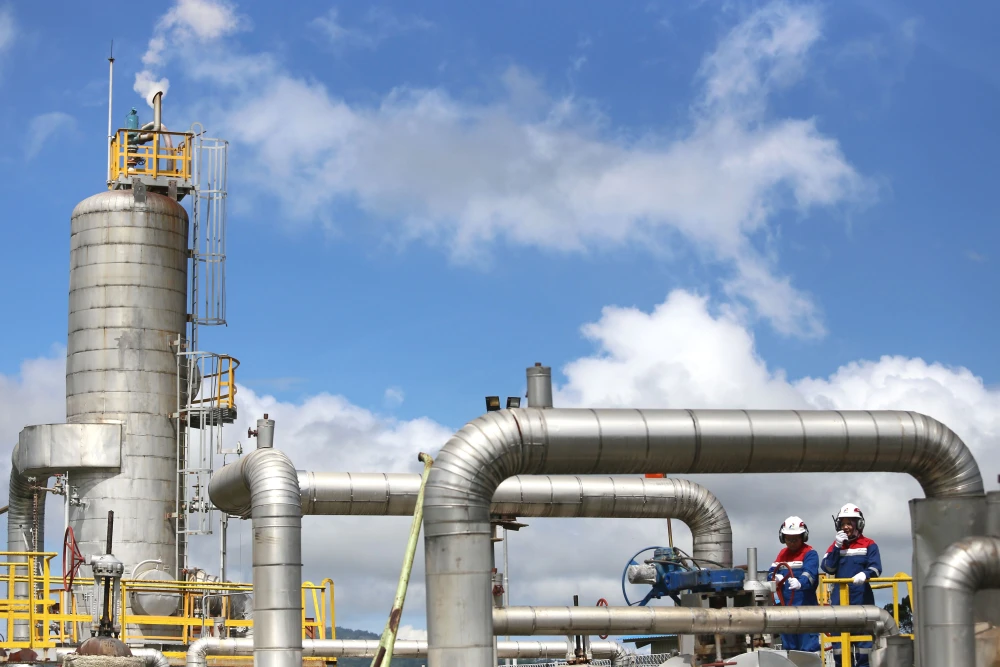
Mexico remains one of the key oil countries of Latin America, although the modern structure of its industry differs greatly from the period of peak production in the early 2000s. Today, the country's oil industry rests primarily on the south-eastern shelf, the Sureste Basin, the mature offshore complexes of Ku-Maloob-Zaap, Cantarell, and Abkatún-Pol-Chuc, as well as newer growth points — Quesqui, Ixachi, Litoral de Tabasco, and certain projects involving private operators. For Mexico, not only oil reserves matter but also the ability to sustain production at ageing fields while simultaneously shifting the balance between crude exports and domestic refining.
In practical terms, the topic of "oil production in Mexico" is interesting for several reasons. First, it is an example of a country where the giant Cantarell field defined an entire era and then ceded leadership to the Ku-Maloob-Zaap complex. Second, Mexico's industry shows how mature offshore fields, new high-pressure projects, and refining are integrated into a single production system. Third, Mexico provides a clear illustration of how declining output at legacy assets reshapes an entire country's export strategy.
Historical overview of the oil industry
Mexico's modern oil industry took shape around the Gulf of Mexico. For a long time, the principal symbol of national oil production was the Cantarell complex in Campeche Bay. At its peak, it supplied a huge share of national output and allowed Mexico to enter the ranks of the world's largest oil producers. Growth in the late 20th and early 21st centuries rested above all on south-eastern offshore fields, and the state company Pemex controlled almost the entire production chain from exploration through to export and refining.
As Cantarell depleted, the industry structure began to change. The Ku-Maloob-Zaap complex became the main production centre, compensating for the decline at the legacy giant over many years. Later, new anchor points were added — Ayatsil, Xanab, Yaxché, Quesqui, Ixachi, and Litoral de Tabasco. This is precisely why modern Mexican oil production is no longer the story of a single supergiant but a far more complex mix of mature and new assets, some of which require substantial investment to sustain output.
For academic papers and applied reviews, Mexico is interesting because the evolution of its national oil model is clearly visible. The country first lived off a super-large offshore field, then shifted to reliance on a second offshore giant, and today is attempting to sustain production through a combination of legacy assets, new high-temperature/high-pressure wells, well-stock workovers, and the reallocation of some barrels from exports to domestic refining.
Geography of oil and gas basins and major fields
Mexico's principal oil geography is concentrated in the Sureste Basin, located in the south-eastern part of the country and connected to both onshore areas and the Gulf of Mexico shelf. According to EIA, this basin contains approximately 81% of the country's proven oil reserves. Of the remainder, approximately 14% comes from the Tampico-Misantla Basin and approximately 5% from the Veracruz Basin. Overall, approximately 70% of reserves are offshore and approximately 30% onshore.
The largest modern production node is Ku-Maloob-Zaap. According to EIA, already in 2022 the three fields of the complex together produced approximately 551 thousand bbl/day, and according to Pemex data, even in 2025 this asset remained the main centre of national output. In Q3 2025, Ku-Maloob-Zaap, Cantarell, and Abkatún-Pol-Chuc together accounted for 68% of all national crude production. This is a very telling figure: modern Mexican oil production remains highly concentrated.
Cantarell is the country's historically most important oil complex. It was this field that once made Mexico a super-large oil supplier. In the 2000s, Cantarell was one of the world's largest offshore fields, but it then entered a phase of deep natural decline. Today its significance is no longer what it once was, but for understanding Mexican oil history and production structure it is a key asset. Effectively, all discussion of the production decline in Mexico begins with the depletion of Cantarell.
Abkatún-Pol-Chuc remains another important offshore asset of the south-east. Although it is smaller than Ku-Maloob-Zaap, its role in the overall national balance persists. Alongside it, the Litoral de Tabasco cluster is important, where the Xanab and Yaxché fields operate. According to EIA, Xanab produced approximately 82 thousand bbl/day in 2022 and Yaxché approximately 48 thousand bbl/day, making them notable assets in the modern production portfolio.
Quesqui and Ixachi in recent years have become important not only as production points but also as indicators of where Pemex is placing its bets during the decline of the legacy giants. Quesqui was long considered one of the main new drivers, but already in 2024–2025 Pemex itself directly cited natural decline at Quesqui as one of the factors in reduced output. For Ixachi, the company separately noted equipment failures in the gas treatment facilities and the complexity of the technological scheme, well illustrating the dependence of new projects on surface infrastructure.
It should also be noted that Mexico does not possess proven deepwater reserves in the way Brazil or Guyana operate them. This is yet another important feature of the country: most production comes not from ultra-deepwater clusters but from a relatively more mature offshore province of Campeche/Sureste and certain onshore and nearshore projects.
Current production status in 2024–2025
According to official Pemex data, in 2024 liquid hydrocarbons including partner production averaged approximately 1.759 million bbl/day. This was below the 2023 result, and the company directly attributed the decline primarily to natural decline at the offshore Maloob and Zaap fields, as well as the weakening of Quesqui. Already in Q4 2024, liquids were approximately 1,670 thousand bbl/day and crude oil was approximately 1,670 thousand bbl/day, showing continued pressure from mature assets.
In 2025 the picture did not fundamentally change. In Q3 2025, crude oil production in Mexico was approximately 1.648 million bbl/day, with 64% coming from offshore and 36% from onshore. Pemex attributed the decline to natural depletion of mature fields, delays in offshore infrastructure commissioning, and the complexity of high-pressure/high-temperature wells. Mexico's Ministry of Finance in April 2025 even lowered the official country forecast to 1.762 million bbl/day instead of the more ambitious target of 1.8 million bbl/day.
The practical conclusion for the topic of "oil production in Mexico" is: the country is no longer in the rapid decline mode of the early 2010s, but it is not showing confident, sustained growth either. The production profile is sustained by a few offshore assets, and any delays in infrastructure, technical problems at new wells, or accelerated depletion of old fields are quickly reflected in national statistics.
A fact useful for essays and presentations: in Q3 2025 Pemex itself indicated that Ku-Maloob-Zaap, Cantarell, and Abkatún-Pol-Chuc still deliver 68% of national crude production. This means that even after years of diversification, the Mexican industry remains dependent on a handful of key offshore clusters in Campeche.
Production technologies and operational characteristics
Technologically, Mexico's oil industry is largely defined by offshore production in the relatively mature part of the Gulf of Mexico. Sustaining production at Ku-Maloob-Zaap, Cantarell, and Abkatún-Pol-Chuc requires constant work with water cuts, pressure, well-stock workovers, and offshore infrastructure. In 2025, Reuters reported that Pemex was even considering additional secondary recovery methods at Ku, Maloob, Zaap, Akal, and Ayatsil in an attempt to extract additional barrels from mature fields.
The second technology block involves new projects onshore and in nearshore zones. Quesqui, Ixachi, Tupilco Profundo, and a number of other assets proved more complex than expected at the outset. Pemex directly acknowledged increased operational complexity in high-pressure, high-temperature wells, as well as delays in offshore infrastructure and gas treatment. This is an important point: modern growth points in Mexico are often linked not so much to classic conventional crude as to a complex engineering scheme in which gas, condensate, and oil production occur together.
The third feature is the close link between production and refining. Mexico for a long time exported significant volumes of crude oil, primarily the heavy Maya blend, but as the loading of domestic refineries increased and the Olmeca refinery at Dos Bocas was commissioned, Pemex began reducing the export stream. This changes not only the trade balance but also the technology logic of upstream: the company increasingly views production through the lens of domestic refining rather than purely export revenue.
For applied industry texts, the following fact is also useful: the gas component of the production system remains one of its weaknesses. Pemex reports for 2024–2025 repeatedly cite problems with compressor equipment, gas treatment at Ixachi, and high nitrogen content at Ku-Maloob-Zaap. This shows that the current constraints on Mexican oil production lie not only in the reservoir but also in surface infrastructure.
Export strategy and role in the global market
Mexico was historically a major oil exporter, primarily of the heavy Mexican Export Mix and Maya grades. The most important external market traditionally remained the USA, explained by both geography and the configuration of American refineries on the Gulf Coast. Even in Q4 2024, when exports were already declining, the USA accounted for approximately 47% of Pemex crude and condensate exports, Europe for 28%, and the Far East for 24%.
However, Mexico's modern export strategy is changing rapidly. In 2025, Pemex stated directly its plans to reduce crude exports as domestic refining capacity increased, primarily through the gradual ramp-up of Olmeca. Reuters in July 2025 reported that exports in one month fell to 458 thousand bbl/day — a multi-decade low. For the country's oil system, this is not merely a trade episode but a sign of a transition to a model where a growing share of production is directed to domestic refineries.
In the global market, Mexico remains an important supplier of heavy crude, but its significance is no longer what it was at the peak of production. The country is now of interest to the market more as a large but declining offshore producer that is simultaneously trying to reduce crude exports and increase domestic refining. For US and some European refiners, Mexican heavy barrels remain important, but their availability is becoming less predictable.
For students and report authors, it is useful to keep in mind: Mexico's export logic today is determined not only by production levels but also by the state of refining. The higher the loading of domestic refineries, the less oil goes to the external market. This makes Mexico's oil model especially interesting, since upstream and refining are linked here far more tightly than in many export-oriented countries.
Challenges facing the industry
Mexico's primary challenge is the maturity of its main fields. Cantarell has long been in natural decline; Ku-Maloob-Zaap is also no longer growing as it once did; and new projects have so far not fully offset the decline at the old giants. This is precisely why the company constantly returns to the topics of well-stock workovers, production intensification, secondary recovery, and new well drilling at existing assets.
The second cluster of problems involves infrastructure. Pemex reports for 2024–2025 regularly cite failures in compressor equipment, delays with offshore facilities, problems in gas treatment systems, and the increased complexity of HPHT wells. For the oil industry, this means production is constrained not only by geology but also by the speed at which the company can construct and maintain offshore and onshore infrastructure.
The third challenge is financial burden and the need to prioritise. Mexico must simultaneously sustain upstream, modernise refineries, develop Dos Bocas, and maintain production at mature fields. In such conditions, investment slowdowns or project deferrals quickly translate into production results. Reuters in 2025 separately noted that some well reactivation and secondary recovery work is being held back by limited resources.
Finally, production concentration remains a significant problem. While three key offshore assets deliver the bulk of oil, the entire system remains sensitive to shutdowns, accidents, adverse weather, and technical failures specifically in Campeche and the south-east of the country.
Development outlook
Mexico's medium-term prospects are not simple, but neither do they reduce to a single decline scenario. Potential for production stabilisation exists: through well-stock workovers, additional wells, secondary recovery at mature offshore fields, and accelerated development of selected new projects. Quesqui, Ixachi, Bakté, and a number of other assets are expected to play an important role, although it is already clear that none of them can, in scale, repeat the Cantarell story.
A separate direction is a closer integration of production with refining. If Olmeca and the national refining system do indeed operate stably at higher volumes, Mexico may reduce crude exports further, keeping a larger share of barrels in the country. This will not necessarily increase output, but it will change the commercial and industrial structure of the sector.
For academic and analytical materials, Mexico is especially valuable as an example of a country where the oil production problem is linked not to a lack of experience or resources but to the natural ageing of the largest offshore fields. Here, the process of an oil industry restructuring after peak production to a more complex, less comfortable, and more capital-intensive support model is clearly visible.
In practical terms, the key question for the coming years is: can Mexico sustain production at around 1.6–1.7 million bbl/day of crude without a new giant discovery comparable in significance to Cantarell or Ku-Maloob-Zaap? The answer to this question will determine the future of Mexico's oil industry.
Conclusion
Mexico remains one of the key oil countries of the Western Hemisphere, but its industry has long operated in a production-maintenance logic rather than a rapid growth logic. The main anchors remain the Sureste Basin, Ku-Maloob-Zaap, Cantarell, Abkatún-Pol-Chuc, Quesqui, Ixachi, and a number of other south-eastern assets. At the same time, the industry's dependence on infrastructure, well-stock workovers, and the balance between export and refining is increasingly felt.
If the key conclusion is to be stated briefly: oil production in Mexico is an example of the transition from the era of an oil supergiant to the era of complex management of a mature offshore portfolio. This is precisely what makes it interesting for search queries, academic papers, and those seeking facts, figures, and a clear picture of oil industry development.
For drilling, well development, and operations projects, Burmetsnab supplies drill pipe, casing pipe, and tubing (NKT). Such tubular products are in demand in projects where reliability, resistance to operational loads, and compliance with real production and well-workover conditions are essential.
Need pipe for your project?
We will select pipe to match your specification and schedule. Price on request.