

Oil production in Norway
Oil production in Norway: Norwegian Continental Shelf, Johan Sverdrup, Ekofisk, Johan Castberg, Equinor, production volumes and export to Europe.
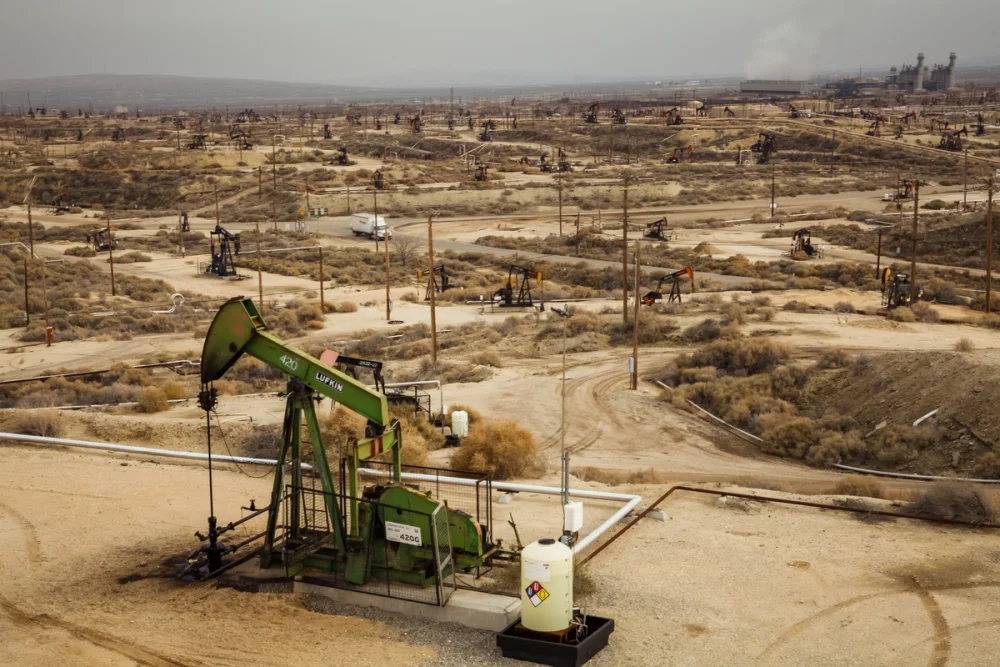
Norway ranks among Europe's largest oil-producing countries and remains one of the key crude suppliers to the European market. The entire modern oil industry of the country is built around the Norwegian Continental Shelf (NCS), where the bulk of production is concentrated in the North Sea, with additional volumes coming from the Norwegian Sea and the Barents Sea. The Norwegian model is characterised by offshore production, developed marine infrastructure, advanced technologies, and a close link between fields, onshore terminals, and export logistics.
Looking at the topic of "oil production in Norway" practically, several anchor facts are important. First, the country has comparatively modest reserves by global standards but exploits them very efficiently. Second, Johan Sverdrup plays an enormous role, contributing approximately one-third of all Norwegian crude. Third, Norwegian oil production is instructive as an example of a mature offshore industry where legacy giants such as Ekofisk and Oseberg continue to operate for decades while new projects such as Johan Castberg extend production into the Barents Sea.
Historical overview of the oil industry
Norway's oil history began in the North Sea. The first landmark discovery was Ekofisk, found in 1969. It launched the country's oil era, and in the 1970s and 1980s the largest shelf fields were successively brought into production — Statfjord, Oseberg, Gullfaks, Troll, and others. For Norway, this was not merely industrial growth but the creation of an entire offshore model with its own engineering school, marine services, drilling, subsea infrastructure, and onshore terminals.
Further development came as activities shifted northward. First the North Sea was the focus, then activity moved increasingly into the Norwegian Sea, and later into the Barents Sea. This makes Norway very instructive for academic and industry materials: on a single national shelf it is possible to observe both mature, highly developed clusters and new frontier projects in the Arctic.
A distinctive feature of Norway is the managed development of the industry. The state, the regulator, and the companies have over decades built a system in which what matters is not only current production volumes but also recovery factors, infrastructure service life, safety, and the economic efficiency of offshore projects. As a result, even mature fields here continue to operate longer than expected at the outset.
Geography of oil and gas basins and major fields
Norway's entire oil base lies on the continental shelf, covering more than 2 million sq km. The main district is the North Sea, which remains the core of the entire oil industry. According to official data, 69 active fields are located here, and this region accounts for the bulk of production. Here too are the key historical and contemporary assets of the country.
Johan Sverdrup is Norway's largest active oil field and the fifth-largest oil asset ever discovered on the Norwegian shelf. In 2023, it produced 712 thousand bbl/day and accounted for approximately 40% of all Norwegian crude production. For the industry, this is the central asset: it combines very large reserves, a high production rate, and low unit lifting costs by offshore standards.
Ekofisk is the historical symbol of Norway's oil industry. It has been operating for more than 50 years, and under current plans production here may continue for approximately another 30 years. For students and report authors, this is a very instructive fact: the Norwegian shelf knows how to extend the life of mature fields through new platforms, modernisation, infill drilling, and precise engineering.
Oseberg, Troll, and Snorre form another of the North Sea's most important nodes. Oseberg is one of the classic Norwegian oil centres. Troll is often perceived as a gas giant, but it remains a notable oil asset as well. Snorre is an example of a mature field where new facilities and enhanced oil recovery measures have extended production. Projects such as these clearly illustrate how Norway's approach to improved oil recovery (IOR) and life extension works.
The Norwegian Sea is less mature than the North Sea but remains an important production zone. Heidrun, Draugen, Åsgard, and associated nodes are significant here. The Barents Sea lagged for a long time, but in 2025 its role rose sharply following the commissioning of Johan Castberg. This is the Barents Sea's second oil field after Goliat, and it was the principal new Norwegian oil event of recent years.
Current production status in 2024–2025
In 2023, Norway produced approximately 2.0 million bbl/day of crude. In 2024, total marketed output of oil, gas, and liquid hydrocarbons on the shelf reached approximately 240 million m³ of oil equivalent, the highest level since 2009. In 2025, the regulator expected crude production of approximately 102.2 million m³, equivalent to approximately 1.8 million bbl/day. This means the country sustains a very high production level for a mature offshore province.
Johan Sverdrup remained the primary driver. In September 2024, it reached a record above 756 thousand bbl/day, and since its start-up in 2019 it has already produced 1 billion barrels. For the European market, this is not merely a large field: its daily output is equivalent to approximately 6–7% of Europe's daily oil consumption. This is precisely why any Sverdrup news immediately becomes significant for the industry and the market.
In 2025, Johan Castberg provided another important growth factor. After its start-up in March 2025, it was expected to ramp up to approximately 220 thousand bbl/day. For Norway, this represents not only new volumes but also a strategic strengthening of the Barents Sea as an oil region. In sum, the picture is: Norway maintains a mature but very strong production base, where legacy fields sustain a high level and new offshore projects support the overall supply volume.
Production technologies and operational characteristics
Norwegian oil production is almost entirely offshore, so the technological profile here is fundamentally different from that of onshore producers. The country uses fixed marine platforms, subsea production systems, long tie-back schemes, onshore processing hubs, and a highly developed marine transport system. In this sense, Norway is one of the world's benchmarks for organising shelf production.
On mature assets, enhanced oil recovery and field life extension technologies are of paramount importance. For Ekofisk, Snorre, Oseberg, and other fields, water injection, reservoir pressure management, platform modernisation, and the tie-in of satellite accumulations through existing infrastructure are critical. Thanks to this, Norway has for decades sustained production at fields that in many countries would long since have been considered in a late depletion stage.
Particular interest attaches to the environmental and energy modernisation of offshore production. Johan Sverdrup became one of the best-known European examples of shore-based power supply to platforms. It also provides power-from-shore to adjacent facilities. In addition, the Norwegian North Sea has Hywind Tampen — the world's largest floating offshore wind farm, connected to oil and gas facilities. For the industry, this is an important example of how oil production can be combined with reducing operational emissions.
In the Barents Sea, the technological scheme is different. Johan Castberg and Goliat rely on the FPSO format and subsea systems. For Norway, this is an important direction: the further the industry moves into the northern seas, the greater the role of floating production systems, Arctic logistics, and precise subsea infrastructure management.
Export strategy and role in the global market
Norway is almost entirely export-oriented. Domestic oil consumption is small relative to production, so the oil industry works primarily for the external market. The bulk of shelf crude is loaded onto shuttle tankers and then, through onshore terminals and larger vessels, shipped to north-western Europe, the Mediterranean, and, when required, further afield.
Key onshore nodes are Sture, Mongstad, Kårstø, and Teesside. Oil arrives there either by pipeline or through offloading from offshore facilities. This arrangement makes exports flexible and allows direct sea shipment to be combined with onshore logistics. For Norway, this matters more than it might seem: offshore production always depends on how uninterruptedly transport and receiving infrastructure operates.
In the global market, Norway is important not only for volume but also for crude quality. The country predominantly produces light and medium low-sulphur grades, including Ekofisk, Oseberg, Statfjord, and Troll. For European refineries, this is convenient and valuable feedstock, and for the market it is one of the most stable non-OPEC supply streams. This is Norway's special role: it does not compete with Middle Eastern giants by reserves, but it remains one of the most reliable offshore and pipeline suppliers to Europe.
Challenges facing the industry
Norway's primary challenge is the maturity of the North Sea. The bulk of infrastructure has been in operation for a long time, and many of the largest fields are in late-stage development. This does not imply rapid decline, but it does require ever-greater investment in infill drilling, IOR, equipment replacement, and new tie-back projects.
The second challenge is the cost and complexity of offshore projects. Norwegian crude is competitive thanks to resource quality, discipline, and developed oilfield services, but offshore production is inherently more complex and costly than onshore. Sustaining volumes requires continuous investment in drilling, platforms, subsea systems, logistics, and onshore terminals.
The third question is how to combine a high production level with emissions-reduction requirements and energy modernisation. Norway is actively developing power-from-shore, offshore wind, and low-emission solutions, but for the industry these are no longer an additional option — they are already part of the baseline production model.
Development outlook
In the medium term, Norway will sustain a high production level, although the regulator expects a gradual decline toward the end of the 2020s. Until then, the industry will be supported by Johan Sverdrup, the start-up of Johan Castberg, the life extension of mature fields, and the tie-in of new small discoveries to existing infrastructure.
The Barents Sea region is especially important. Official Norwegian Petroleum and SODIR materials emphasise that a significant share of Norway's yet-to-be-discovered resources is concentrated in the Barents Sea. Johan Castberg is therefore interesting not only in its own right but as a future infrastructure hub for new satellite discoveries.
For students, essay authors, and applied-text writers, Norway is useful as an example of a mature oil country that knows how to produce large volumes not through giant reserves but through efficient offshore engineering, a high culture of field development, and continuous improvement of recovery factors. It is one of the most instructive oil systems in Europe.
Conclusion
Norway remains one of Europe's key oil nations thanks to a strong offshore base, developed infrastructure, and several world-class fields. The North Sea and Johan Sverdrup form the backbone of the industry, and the strategic growth for the coming years is linked to Johan Castberg and further development of mature shelf assets.
If the key conclusion is to be stated briefly: Norwegian oil production is an example of how a mature province can remain a powerful supplier through technology, discipline, and well-designed infrastructure. This is precisely what makes the country interesting for search queries, academic work, and applied analysis of the global oil industry.
For drilling, field development, and oilfield operations projects, Burmetsnab supplies drill pipe, casing pipe, and tubing (NKT). Such tubular products are in demand wherever reliability, service life, and resistance to demanding production, workover, and crude-transport conditions are essential.
Need pipe for your project?
We will select pipe to match your specification and schedule. Price on request.