

Oil production in Russia
Oil production in Russia: Western Siberia, major fields, Rosneft, Lukoil, Gazprom Neft, production volumes in 2024, export reorientation and development outlook.
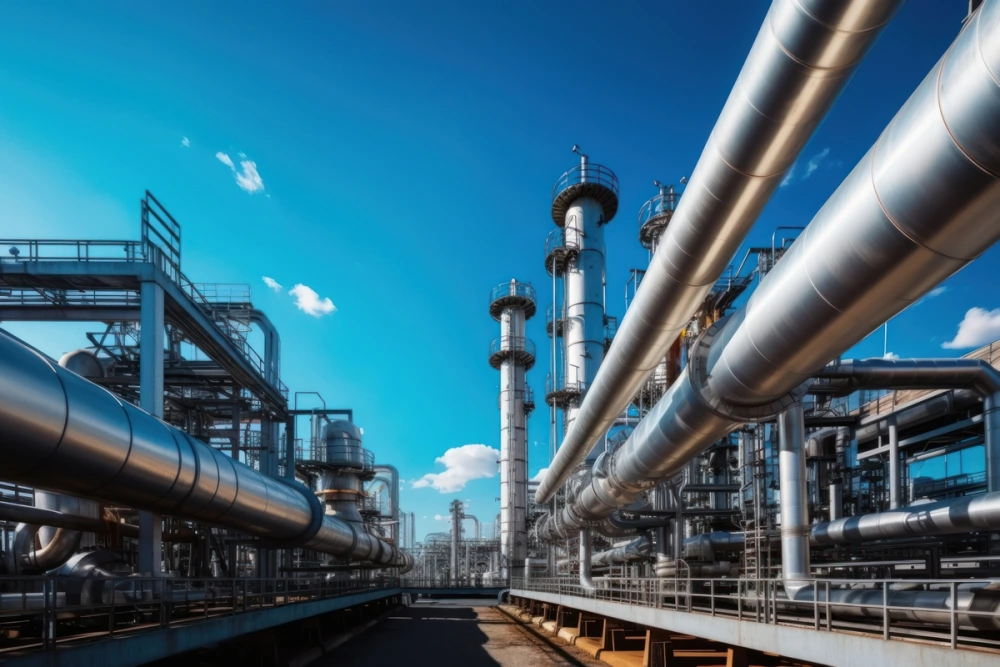
Russia remains one of the key players in the global oil market and holds third place in the world by oil production. In 2024, total output was 516 million tonnes, equivalent to approximately 10.32 million barrels per day. The bulk of reserves and production is concentrated in Western Siberia, and the sector's resilience in recent years has been maintained through import substitution, the development of horizontal drilling, and the reorientation of export flows to Asian markets.
Historical overview of the oil industry
The history of Russian oil production spans almost three centuries. The first industrial wells were drilled in 1745 in the Ukhta area, but large-scale industry development began considerably later. In the 1870s, the oil industry received a powerful impetus from the Baku oil boom, when the first large vertically integrated companies emerged, associated with the names of the Nobels and the Rothschilds.
During the Soviet period, the oil industry became the strategic foundation of the economy. After nationalisation, active development of the Volga-Ural oil and gas province began, and one of the most important events was the discovery of the Romashkino field in 1948. A new phase opened with the discovery of the Samotlor field in 1965, after which Western Siberia became the country's main oil-producing region.
This Western Siberian phase delivered rapid production growth: from 148 million tonnes in 1965 to a peak of 569 million tonnes in 1987. After the dissolution of the USSR, the industry went through a privatisation period and formed its modern structure, dominated by the largest companies: Rosneft, Lukoil, Surgutneftegas, Tatneft, and Gazprom Neft.
Geography of oil and gas basins and major fields
Russia possesses the world's largest territory with diverse oil and gas geology. The most significant oil-producing regions of the country differ in their degree of maturity, crude quality, and technological challenges.
- West Siberian Basin — Russia's primary oil-producing region, accounting for the principal share of reserves and output. Here are the largest fields: Samotlor, Priobskoye, and Fedorovskoye.
- Volga-Ural Basin — the oldest industrial region of the country, home to the Romashkino field, considered the largest in Europe.
- Eastern Siberia — a strategic resource base for oil exports to Asia. The Vankor field is of key significance here.
- Arctic Shelf — a long-term development direction with a high capital threshold. The Prirazlomnoye project became Russia's first Arctic field with year-round production.
The Bazhenov Formation is of special significance for the industry's future, often regarded as one of the largest shale basins outside the USA. Its potential is directly linked to the development of horizontal drilling, multistage hydraulic fracturing, and modern enhanced oil recovery methods.
Current production status in 2023–2024
In 2024, Russian oil production was 516 million tonnes, equivalent to approximately 10.32 million barrels per day. This is slightly below the 2023 level, primarily due to voluntary restrictions under the OPEC+ agreement rather than depletion of the resource base.
The dynamics of recent years were as follows:
- 2020 — approximately 512 million tonnes
- 2021 — approximately 524 million tonnes
- 2022 — approximately 535 million tonnes
- 2023 — approximately 531 million tonnes
- 2024 — approximately 516 million tonnes
Expert assessments indicate that Russia's production potential remains at approximately 11–11.5 million barrels per day. The largest companies retain their leading roles in the industry: Rosneft, Lukoil, Gazprom Neft, Surgutneftegas, and Tatneft.
Production technologies and operational characteristics
Russian oil production is changing technologically at a rapid pace. In mature regions, the main emphasis is on sustaining production, improving oil recovery factors, and reducing well-stock maintenance costs. For new and hard-to-recover reserves, more complex technological solutions are applied.
- Horizontal drilling
- Multistage hydraulic fracturing
- Digital well monitoring systems
- Domestic drilling and well-completion solutions
- Enhanced oil recovery methods
For operations in complex geological conditions, reliable tubular solutions resistant to cyclic loads, aggressive environments, and great depths are especially important. This is critical for Western Siberian, Arctic, and hard-to-recover projects.
Export and market reorientation
Despite sanctions pressure, Russia retains its status as one of the world's largest oil exporters. In 2024, exports amounted to approximately 240 million tonnes. The supply geography has substantially changed: the main destinations are now China, India, and a number of other Asian countries and Türkiye.
The reorientation of exports was accompanied by development of logistics infrastructure, including the Eastern Siberia – Pacific Ocean (ESPO) pipeline system, modernisation of sea terminals, and restructuring of supply chains. This became one of the key factors of sector resilience.
Challenges facing the industry
The main challenges for Russian oil production today are linked not so much to the resource base as to technological and infrastructural adaptation.
- Sanctions restrictions on equipment and oilfield services
- Accelerated import substitution of critical technologies
- Growing share of hard-to-recover and mature reserves
- High capital costs for Arctic and Eastern Siberian projects
- Dependence of part of market dynamics on OPEC+ agreements
After the departure of a number of Western service companies, the Russian market was compelled to adapt at an accelerated pace. This stimulated the development of domestic contractors, equipment localisation, and more active introduction of proprietary engineering solutions.
Development outlook
In the medium term, Russia will in all probability sustain high production volumes. The main growth points are linked to the development of Eastern Siberia, the Arctic, hard-to-recover reserves, and deeper modernisation of producing fields.
The key resilience factors remain the large-scale resource base, accumulated production experience, logistics development, and the broader application of modern drilling and oilfield services technologies. Digitalisation, import independence, and improved technological efficiency will all play important roles.
Conclusion
Russia remains one of the foundational centres of global oil production. Even under external constraints, the industry retains high production potential, continues its adaptation, and remains a vital part of global energy. In the coming years, sector resilience will be determined not only by the resource base but also by the pace of technological renewal, the quality of oilfield services support, and logistics efficiency.
For drilling projects, development of new fields, and ensuring uninterrupted operation of oil and gas enterprises, Burmetsnab supplies drill pipe, casing pipe, and tubing (NKT) with delivery across Russia.
Need pipe for your project?
We will select pipe to match your specification and schedule. Price on request.