

Oil production in Saudi Arabia
Oil production in Saudi Arabia: Ghawar, Safaniyah, Saudi Aramco, OPEC spare capacity, production volumes and export strategy.
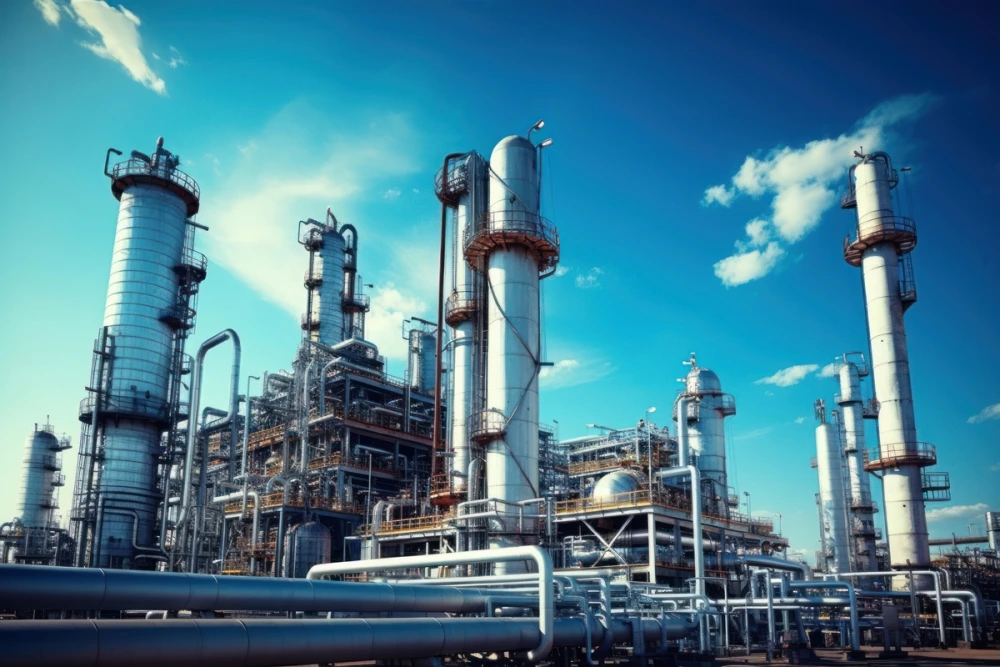
Saudi Arabia is one of the key centres of global oil production and the most influential producer within OPEC. This is where the giant fields of Ghawar and Safaniyah are located, and the state company Saudi Aramco manages virtually the entire chain — from exploration and production through to processing, export, and refining. For the global market, the country is important not only for its production volumes but also for the spare capacity that allows rapid increases in deliveries when crude supply is short.
The kingdom's oil industry rests on the Eastern Province, the Persian Gulf, and powerful export infrastructure. In recent years, Saudi Arabia has deliberately held actual production below the technically available level under the OPEC+ policy, while preserving the ability to quickly increase supply. Assessing its role therefore requires looking not only at current barrels per day but also at available production capacity, resource-base quality, and the robustness of export routes.
Historical overview of the oil industry
Saudi Arabia's modern oil industry took shape after the discovery of large fields in the Eastern Province in the mid-20th century. Rapid production growth was enabled by a combination of a large resource base, favourable geology, and large-scale infrastructure investment. By the end of the last century, the kingdom had become one of the world's main oil exporters and a systemic participant in the global price balance.
Saudi Aramco plays the pivotal role in the industry — the national company that in practice determines the pace of field development, refining loading, export delivery schedules, and long-term investment. This makes the Saudi model sharply different from countries with a fragmented private upstream sector: here, production, infrastructure, and export policy are managed from a single centre.
A separate phase of development came in the 2000s and 2010s, when Aramco consistently maintained the world's largest spare production capacity. In 2024, the company abandoned the plan to expand capacity to 13 million bbl/day and retained the official maximum sustainable capacity target at 12 million bbl/day, while continuing projects at Marjan, Berri, and Zuluf. This shows that the priority has shifted from simply increasing nominal capacity to more flexible portfolio management.
Geography of oil and gas basins and major fields
The country's main oil district is the Eastern Province and the Persian Gulf waters. Here are concentrated the largest onshore and offshore fields, terminals, refining, and export logistics. In terms of geology and reserve structure, this is one of the world's strongest oil provinces, where the high concentration of large accumulations allows large-scale production to be sustained at comparatively low lifting costs.
The country's primary asset is Ghawar — the world's largest onshore oil field. It remains the foundation of Saudi oil production and a symbol of the entire industry. For the global market, Ghawar's significance lies in the fact that it is not a stand-alone local asset but a giant production system with an extensive well network, reservoir pressure-maintenance systems, gathering, treatment, and oil transport. On the shelf, the key position belongs to Safaniyah — the world's largest offshore oil field.
Among other key projects, Khurais, Shaybah, Manifa, Zuluf, Marjan, and Berri deserve mention. Khurais and Shaybah are important as powerful large assets with modern onshore infrastructure. Manifa and Safaniyah strengthen the offshore component of production. Marjan, Berri, and Zuluf are not merely active fields but nodes of the current capacity maintenance and redistribution programme. According to EIA and Aramco, after the expansion programme was revised, precisely Marjan, Berri, and Zuluf remained among the main projects that together should deliver hundreds of thousands of barrels of additional or supporting capacity in 2025–2026.
Current production status in 2024–2025
Saudi Arabia remains one of the world's largest oil producers, but its actual output in 2024 was below its technical potential. This is not linked to geological constraints but to OPEC+ commitments and voluntary cuts. After a level of approximately 9.5 million bbl/day of crude in 2023, the country worked closer to approximately 9 million bbl/day in 2024, while the full available production capacity remained substantially higher.
This is precisely why Saudi Arabia's industry cannot be analysed using current production statistics alone. Unlike most producers, the kingdom can add a large volume to the market relatively quickly. Reuters, citing IEA, estimated Saudi Arabia's spare capacity at approximately 3.1 million bbl/day at the start of 2025. This makes the country the world's primary holder of spare production capacity and one of the few suppliers capable of materially influencing the market balance not over years but in a short time horizon.
For the internal structure of the industry, it is also important that Saudi Aramco continues to maintain high technical production readiness even when part of its capacity is deliberately under-utilised. This model is expensive in terms of capital and maintenance, but it gives Riyadh an instrument for influencing prices, exports, and supply resilience.
Production technologies and operational characteristics
Saudi oil production is built on the exploitation of giant conventional reservoirs, but this does not imply a simple technological scheme. At the largest assets, large-scale water injection systems are used to maintain reservoir pressure, together with intelligent well-stock management, advanced geo-steering, digital monitoring, and large oil processing centres. For mature zones, methods that sustain the production plateau without sharp increases in water cut or loss of crude quality are especially important.
On offshore projects in the Persian Gulf, marine platforms, subsea infrastructure, and onshore processing complexes are used. For the Marjan, Berri, and Zuluf projects, not only production but also the expansion of surface facilities, transport systems, separation and treatment capacity, and the integration of new zones into Aramco's common infrastructure are all of great importance.
A distinctive feature of Saudi Arabia is that its technology strategy is directed not only at growing barrels but at supply-chain reliability. It is critical here to ensure predictable operation of large facilities, rapid redistribution of flows between grades and terminals, and quality control of export grades — Arab Light, Arab Medium, Arab Heavy, and other Saudi grades — in demand at Asian and global refineries.
Export strategy and role in the global market
Saudi Arabia is the world's largest exporter of crude oil. In 2023, it exported approximately 7.0 million bbl/day of crude, with Asia accounting for approximately 75% of these deliveries. The main buyers are in China, Japan, South Korea, and India, so the Saudi export system is substantially oriented toward Asian demand and toward long-term relationships with major refiners.
The main export nodes are on the Persian Gulf coast, but the East-West Pipeline also plays a strategic role as an alternative bypassing the Strait of Hormuz. According to EIA, its base capacity is approximately 5 million bbl/day, with a temporary expansion to 7 million bbl/day. For the global market, this is an important element of resilience: in the event of risks on the traditional route, the kingdom is capable of redirecting part of its flows to the Red Sea and the Yanbu terminal.
In the global market, Saudi Arabia simultaneously fulfils three functions. First, it is a large supplier of physical crude. Second, it is the largest OPEC participant and the effective centre of coordination of the cartel's production policy. Third, it is the holder of the world's largest spare capacity, which in itself influences the price — even when the additional barrels do not enter the market, their very existence influences traders' expectations, importers' strategies, and the behaviour of other producers.
Challenges facing the industry
For Saudi Arabia, the primary challenge is not a shortage of reserves but the correct management of a vast resource base. The oil sector must simultaneously maintain high technical readiness, comply with OPEC+ quotas, sustain export discipline, and prevent accelerated depletion of individual mature zones. For Ghawar and other legacy giants, this means constant work with reservoir pressure, water cuts, and well-stock structure.
The second challenge is the capital intensity of the spare-capacity system. Maintaining millions of barrels of free capacity is possible only with continuous investment in producing fields, offshore projects, pipelines, refining, and onshore infrastructure. This is justified from the perspective of market influence, but it requires a careful balance between production, investment, and the pricing environment.
The third cluster of issues relates to export infrastructure and logistics. Despite the power of the Saudi system, the principal volumes are still tied to sea routes and large terminals. For the industry, what matters is therefore not only reservoirs and flow rates but also the reliability of pipelines, refining, tanker logistics, and external supply channels.
Development outlook
In the medium term, Saudi Arabia will retain its status as one of the world's strongest oil players. Its primary advantages are the world's largest conventional resources, a powerful unified management structure in the form of Saudi Aramco, developed infrastructure, and the ability to quickly manoeuvre volumes. Even after abandoning the target of 13 million bbl/day, the country remains the only producer capable of sustainably holding approximately 12 million bbl/day of maximum sustainable capacity.
The immediate outlook is linked not to a sharp increase in actual output but to the completion of the Marjan, Berri, and Zuluf projects, the maintenance of the production potential of Ghawar, Safaniyah, Khurais, and Shaybah, and further upstream-downstream integration. This means the kingdom will be strengthening its flexibility and resilience in the global market rather than expanding physical volume at any cost.
For the global oil balance, Saudi Arabia will for a long time remain the primary supply "buffer." Its industry is therefore important not only by reserves and production volume but also as a mechanism for stabilising the global market in periods of deficit or overheating.
Conclusion
Saudi Arabia is a country where the oil industry is built around giant fields, the centralised management of Saudi Aramco, and the world's largest spare production capacity. Ghawar, Safaniyah, Khurais, Shaybah, Marjan, Berri, and Zuluf form the production foundation that gives the kingdom not only high output but strategic influence in the global market.
Assessing Saudi Arabia's industry requires taking into account three parameters simultaneously: proven reserves, actual production, and available production capacity. It is precisely this combination of factors that makes the country a key OPEC participant and one of the principal regulators of the global oil balance.
For drilling, field development, and oilfield operations projects, Burmetsnab supplies drill pipe, casing pipe, and tubing (NKT). This allows well and field projects to be equipped with tubular products suited to actual production, transport, and workover conditions.
Need pipe for your project?
We will select pipe to match your specification and schedule. Price on request.