

Oil production in the UAE
Oil production in the UAE: ADNOC, Abu Dhabi, Upper Zakum, Bu Hasa, Murban, production capacity to 5 million bbl/day, export through Fujairah.
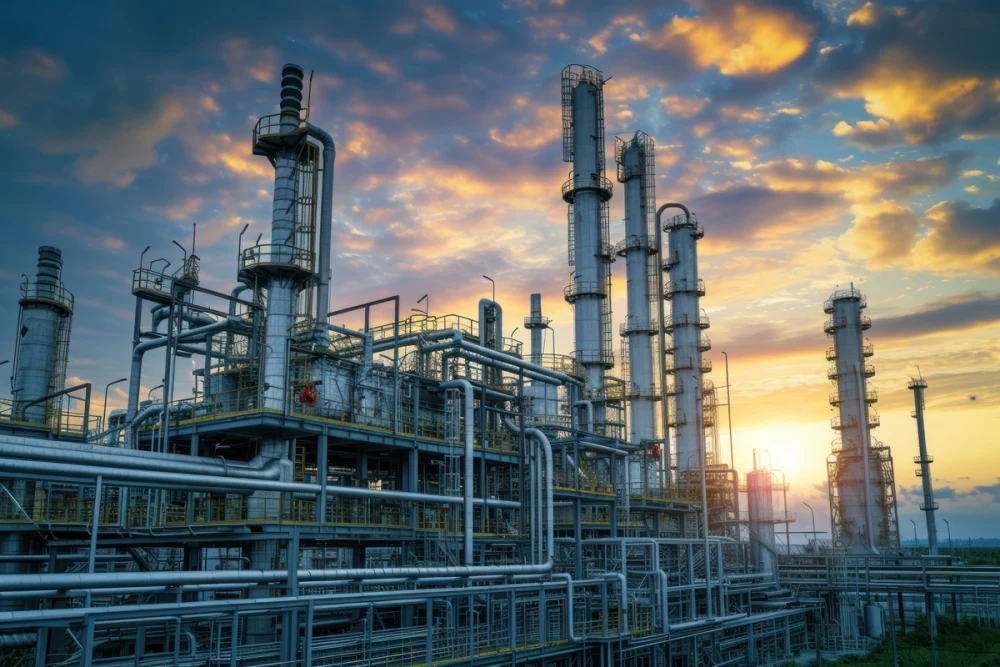
The UAE is one of the Middle East's largest oil-producing countries, with the bulk of production and reserves concentrated in the Emirate of Abu Dhabi. The country's oil industry rests on major onshore assets — Bu Hasa and Bab — offshore projects including Upper Zakum, Lower Zakum, Umm Shaif, Nasr, SARB, and Umm Lulu, and a vertically integrated ADNOC system that brings together production, export, refining, and infrastructure development.
Unlike many countries in the region, the UAE is committed not only to increasing volumes but also to technologically advanced production. Artificial islands, extended-reach drilling, well digitalisation, AI-based well-stock management, modernisation of Ruwais, and development of the export corridor through Fujairah all allow the country to increase supply flexibility and prepare new capacity. The UAE oil industry is therefore important not only for its reserves and current output but also as one of the most technologically sophisticated upstream sectors in the region.
Historical overview of the oil industry
The UAE's oil industry developed around Abu Dhabi, where the country's largest fields were discovered and the principal export infrastructure was created. Already in the first decades after the start of commercial production, oil became the base of economic growth, and the state then transitioned to a model in which the national company ADNOC and a system of concessions with international partners play the central role.
Historically, the industry developed along two directions: onshore production on the mainland and offshore projects in the Persian Gulf. This allowed the resource base to be progressively expanded, the production profile to be diversified, and deliveries of both light and heavier grades to be increased. Over time, Abu Dhabi became the oil core of the entire federation, and the export grades — Murban, Upper Zakum, Das, and Dubai — secured a stable place in the global market.
In recent years, the emphasis has shifted to accelerated growth of production capacity. ADNOC is not simply sustaining existing volumes but is systematically increasing capacity through drilling, field modernisation, onshore infrastructure, digital management, and investment in Ruwais and the export system. This makes the UAE one of the most dynamic producers within OPEC.
Geography of oil and gas basins and major fields
Almost all of the UAE's key oil geography is concentrated in Abu Dhabi. Onshore, the main contribution comes from ADNOC Onshore assets, which manages 11 fields in four major groups: Bab, North East Bab, Bu Hasa, and South East. Among these, Bu Hasa stands out as the country's largest onshore field, as does the Bab group, which holds significant reserves and has deployed major reservoir pressure-maintenance and digital production-management programmes.
Offshore, the foundation is provided by ADNOC Offshore assets. The company officially manages nine main fields: Upper Zakum, Lower Zakum, Umm Shaif, Satah, Nasr, Umm Al Dalkh, SARB, Umm Lulu, and Abu Al Bukhoosh. The principal offshore node is Upper Zakum, one of the world's largest offshore fields and a key source of the Upper Zakum grade. A significant share of UAE offshore production is built around it.
Export and production nodes deserve separate mention. For the offshore system, the Das Island and Zirku Island terminals are important, where oil is processed, stored, and offloaded. For onshore production, Jebel Dhanna and Fujairah are critical. This structure makes the UAE not merely a country with large reserves but a compact and well-connected oil system in which fields, pipelines, refining, and exports operate as a single circuit.
Current production status in 2024–2025
In 2024, the UAE produced approximately 2.9 million bbl/day of crude, operating noticeably below the technically available level due to OPEC+ constraints. At the same time, EIA noted a quota increase to 3.22 million bbl/day, and ADNOC stated in May 2024 that production capacity had already reached 4.85 million bbl/day. This is an important detail: the country's actual potential is now substantially above its actual output.
The gap between the current production level and available capacity means the UAE remains one of the few OPEC producers capable of materially increasing deliveries without a multi-year preparatory cycle. This is precisely why the market watches closely not only monthly production but also ADNOC's commissioning of new capacity, the dynamics of Zakum, Bu Hasa, and Bab, and the distribution of flows between exports and domestic refining.
In 2025, the strategic target did not change: the country continues to prepare for the 5 million bbl/day mark by 2027. To this end, upstream is being expanded not point-by-point but systemically — through drilling, production optimisation, digitalisation, processing of heavier grades, and export infrastructure development. The UAE is therefore increasingly viewed not simply as a stable Middle Eastern producer but as one of the fastest-strengthening players in terms of available spare capacity.
Production technologies and operational characteristics
The UAE's technology base is one of the primary growth factors. On offshore assets, ADNOC actively uses artificial islands, horizontal and extended-reach drilling, which is particularly evident at Upper Zakum. In 2022, ADNOC Drilling drilled a 50,000-foot well here, setting a world record for the length of an oil and gas well. This is not an image exercise but a demonstration of how the country improves reservoir drainage coverage and reduces the number of surface facilities in sensitive offshore areas.
On onshore fields, the emphasis is on digital management. In 2024, ADNOC expanded an AI-based well digitalisation programme intended to provide remote monitoring and management of more than 2,000 wells at Bab, Bu Hasa, and South East. For production, this means fewer shutdowns, more precise well operating-mode adjustment, and faster response to changes in reservoir parameters.
Another important topic is reservoir pressure maintenance and water management. The Sustainable Water Supply project for Bab and Bu Hasa envisages centralised seawater processing and injection, replacing more energy-intensive schemes and reducing water-injection energy costs by approximately 30%. Combined with Ruwais modernisation, this makes the UAE oil system more efficient and better prepared for production growth without overloading legacy infrastructure.
Export strategy and role in the global market
UAE oil exports are built around Abu Dhabi and the grades Murban, Upper Zakum, Das, and other marks. In recent years, Murban has strengthened its role as the flagship export grade. In 2024, ADNOC redistributed flows to increase Murban deliveries to the external market, while a portion of heavier flows, including Upper Zakum, was directed more strongly toward refining following the Ruwais upgrade.
For the country, it is critical to have an alternative export corridor bypassing the Strait of Hormuz. This role is performed by the Abu Dhabi Crude Oil Pipeline, or Habshan–Fujairah/ADCOP, with a capacity of approximately 1.5 million bbl/day. It links Abu Dhabi's fields to the Fujairah coast on the Gulf of Oman. For the export strategy, this gives the UAE additional resilience, reduces dependence on a single sea route, and strengthens Fujairah's role as an oil hub.
In the global market, the UAE occupies a special position. It is not the largest producer by current actual output, but one of the most important by the combination of factors: large reserves, high spare capacity, technologically advanced upstream, modern refining, and rapid capacity growth. This is precisely why the country is consistently strengthening its position within OPEC and in Asian supply.
Challenges facing the industry
The UAE's primary challenge for the oil industry is not a shortage of reserves but the task of synchronously expanding production, infrastructure, and sales channels. When capacity approaches 5 million bbl/day, not only new wells must be drilled but also terminals, pipelines, refining, storage, and export windows must be maintained. Without this, capacity growth remains nominal.
The second important question is the balance between OPEC+ requirements and ADNOC's internal strategy. The country is investing heavily in capacity growth, but actual production cannot always close quickly on the technical maximum. For the UAE, it is therefore important that new capacity does not sit idle too long and that the investment cycle is aligned with external quotas.
The third cluster of issues relates to managing an increasingly complex system of offshore and onshore assets. As the share of digital solutions grows and production integration with refining deepens, the importance of equipment reliability, cyber-risk resilience, oilfield service quality, and timely modernisation of onshore facilities all increase.
Development outlook
The UAE oil industry's prospects look strong. The country has already reached a capacity level of 4.85 million bbl/day and officially targets 5 million bbl/day by 2027. Underlying this growth is Abu Dhabi, ADNOC Onshore and ADNOC Offshore projects, development of Zakum, Bab, Bu Hasa, Ruwais, and the export corridor via Fujairah.
Growth will come not only through new well commissioning but also through improved recovery factors, digital management, deeper optimisation of well stocks, and modernisation of the entire chain from reservoir to export terminal. For the market, this means the UAE will continue to strengthen its role as one of the best-prepared suppliers of incremental crude within OPEC.
In the long term, the country's strong suit remains the compactness and manageability of the system. When reserves, fields, exports, and refining are concentrated within a unified ADNOC strategy, the oil industry gains what many competitors lack: rapid decision-making and a high level of technological connectivity.
Conclusion
The UAE is an oil system in which almost everything key is concentrated in Abu Dhabi: reserves, the largest fields, export grades, infrastructure, and ADNOC investment. Bu Hasa, Bab, Upper Zakum, Lower Zakum, Umm Shaif, Nasr, SARB, and Umm Lulu form the production base, while Fujairah, Ruwais, Das Island, and Zirku Island provide logistics and export flexibility.
The country's primary advantage is the combination of a large resource base, high technological sophistication, and an active growth strategy. The UAE's role in the global oil market is therefore determined not only by current barrels but also by how quickly the country can commission new capacity and convert it into a sustained export stream.
For drilling, field development, and oilfield operations projects, Burmetsnab supplies drill pipe, casing pipe, and tubing (NKT). This helps equip field and well projects with tubular products suited to real operational loads, service environments, and reliability requirements.
Need pipe for your project?
We will select pipe to match your specification and schedule. Price on request.