

Oil production in the USA
Oil production in the USA: Permian Basin, shale revolution, 13.2 million bbl/day record in 2024, Bakken, Eagle Ford, horizontal drilling and fracking.
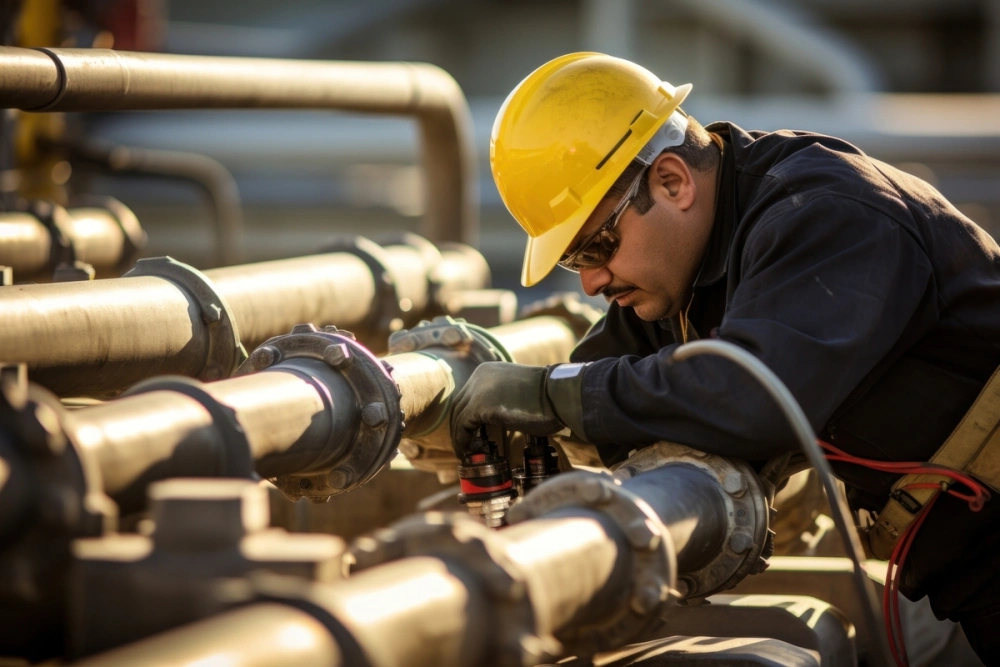
The United States remain the world's largest oil producer. In 2024, production reached a record 13.2 million barrels per day, with the Permian Basin remaining the primary growth driver, delivering approximately 6.3 million barrels per day, or almost half of American output. The foundation of this leadership is the shale industry's technological model: horizontal drilling, multistage hydraulic fracturing, high well-commissioning rates, and flexibility in responding to changing price conditions.
Historical overview of the oil industry
The history of American oil production began on 27 August 1859, when Edwin Drake drilled the first commercial oil well in Titusville, Pennsylvania. This event is generally considered the beginning of the world oil age. In the late 19th and early 20th centuries, the centre of oil activity shifted to Texas, where the discovery of Spindletop in 1901 became a symbol of the oil boom and laid the foundation for the industry's future growth.
Through the 20th century, the USA was for a long time the world's largest oil producer, but after reaching a peak of 9.6 million barrels per day in 1970 a multi-year decline began. By 2008 output had fallen to approximately 5 million barrels per day. The turning point came with the shale revolution, when the combination of horizontal drilling and multistage hydraulic fracturing allowed previously uneconomical resources to be developed. By 2018 the USA had again reached first place in the world by oil production.
Geography of oil and gas basins and major fields
American oil production is concentrated in several key basins, but the absolute leader is the Permian Basin, located in West Texas and New Mexico. This is the USA's largest oil and gas district, which in 2024 delivered approximately 6.3 million barrels per day, or roughly 48% of all US production.
- Permian Basin — the main centre of American oil production, comprising the Delaware Basin, Midland Basin, and Central Basin Platform sub-basins.
- Bakken Formation — a major shale region in North Dakota and Montana, with production of approximately 1.1 million barrels per day.
- Eagle Ford Shale — an important basin in South Texas, with production of approximately 1.0 million barrels per day.
- Niobrara Formation — a developing basin in Colorado and Wyoming.
- Gulf of Mexico — the main offshore production district, delivering approximately 1.8 million barrels per day.
- Prudhoe Bay in Alaska — a mature but still significant field.
The Permian Basin's distinctive feature is its multi-layered geology, which allows several productive horizons to be developed from a single pad. It is precisely this geological and technological combination that makes the basin the primary driver of US supply growth.
Current production status in 2023–2024
In 2024, the USA reached a new all-time record of 13.2 million barrels per day. The increase compared with 2023 was approximately 2%, or around 370 thousand barrels per day. Despite inflationary pressure, workforce shortages, and investor demands for capital returns, the industry continued to grow through improved well productivity and drilling optimisation.
The production structure by state underscores the south's dominance:
- Texas — approximately 5.7 million barrels per day
- New Mexico — more than 2.0 million barrels per day
- North Dakota — approximately 1.1 million barrels per day
American oil production is highly sensitive to market conditions. After the sharp fall in 2020 to approximately 11.3 million barrels per day, production recovered in less than two years. Such speed is practically unachievable for conventional large fields in other countries.
Production technologies and operational characteristics
The US oil production technology base is considered one of the most advanced in the world. The foundation is horizontal drilling, multistage hydraulic fracturing, digital monitoring, and high process standardisation. Horizontal section lengths frequently reach 3,000–4,500 metres, and the number of hydraulic fracturing stages per well can be 40–60 or more.
- Long-reach horizontal drilling
- Pad drilling — drilling multiple wells from a single location
- Multistage hydraulic fracturing
- Automated drilling rigs
- Real-time monitoring systems
- Data analytics and machine learning for optimisation of drilling and completion parameters
Reliable tubular solutions are critically important for shale projects. Under intensive drilling and hydraulic fracturing regimes, high-strength pipe rated for cyclic loads, large injection volumes, and complex operating conditions is used.
Export strategy and role in the global market
In less than a decade, the USA moved from being the world's largest crude importer to one of its largest exporters. In 2024, crude exports were estimated at approximately 4.0 million barrels per day. The principal export infrastructure is concentrated on the Gulf Coast, including the Houston and Corpus Christi terminals.
The US role in the global market differs from the OPEC model. There is no single state mechanism for coordinating production here, so the American industry responds to price signals as a market system. It is precisely this flexibility that makes the USA an important factor in the global supply balance and in dampening price spikes.
Challenges facing the industry
Despite its leadership, the American oil industry faces a number of constraints:
- Tightening environmental regulation and methane-emission reduction requirements
- ESG investor pressure and growing carbon-neutrality requirements
- Depletion of the most productive zones in several shale districts
- Rising costs of services, pipe, proppant, and labour
- Dependence of the growth rate on price conditions and access to capital
An additional challenge is that shale wells are characterised by rapid decline rates. This requires continuous drilling of new well stock to sustain the overall production level.
Development outlook
In the coming years, the USA will in all probability retain first place in the world by oil production. The primary growth potential is linked to the continued development of the Permian Basin, improved drilling efficiency, better completion technologies, and digitalisation of production processes.
At the same time, the industry will be seeking a balance between production growth, environmental constraints, and investor interests. The most likely scenario is not explosive growth but more selective improvement of efficiency and development of the most economically attractive assets.
Conclusion
The USA retains its leadership in the global oil market thanks to the shale revolution that made the Permian Basin the primary driver of oil supply growth. High technological sophistication, flexibility in drilling programmes, and the ability to quickly adapt to changing conditions make the American industry one of the most dynamic in the world. Further development will depend on the combination of technology, financial discipline, and environmental requirements.
For horizontal drilling projects and intensive hydraulic fracturing programmes, Burmetsnab supplies drill pipe, casing pipe, and tubing (NKT) for oil and gas enterprises and oilfield service contractors.
Need pipe for your project?
We will select pipe to match your specification and schedule. Price on request.