

Oil production in Venezuela
Oil production in Venezuela: Orinoco Belt, super-heavy oil, PDVSA, production volumes, upgraders, export through Jose terminal and development outlook.
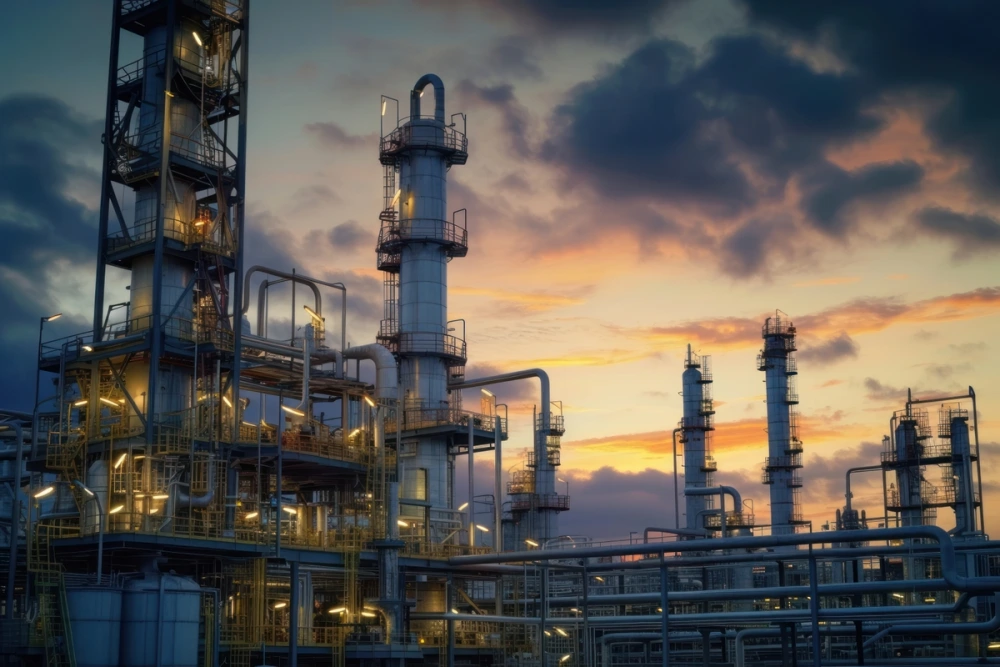
Venezuela holds the world's largest proven oil reserves, yet the country's actual production has for many years remained far below its resource potential. The fundamental reason lies in the reserve structure: a significant share is concentrated in the Orinoco Belt and consists of extra-heavy crude that cannot simply be produced and exported without dilution, upgrading, and complex surface infrastructure. For Venezuela, therefore, having enormous reserves is not sufficient — the entire technological chain from wellhead to terminal must be maintained and operational.
For queries such as "oil production in Venezuela," "Venezuela oil reserves," or "largest oil fields in Venezuela," it is important to understand the country's central paradox: by reserves it is comparable to the world leaders, yet by actual production and exports it is noticeably behind them. This is precisely why Venezuela's oil industry is of interest not only as a resource giant but also as a clear illustration of how crude quality, infrastructure condition, heavy oil, and logistics determine the real outcome of an industry.
Historical overview of the oil industry
The history of oil production in Venezuela began long before the modern Orinoco Belt. The first major production centre was the Lake Maracaibo area, where in the first half of the 20th century the country became one of the world's largest crude exporters. Western Venezuela for decades defined the country's oil profile, and commodity revenues became the foundation of the economy.
Later, the vector shifted to the east and centre of the country, when it became clear that the main strategic reserves were in the Orinoco Belt. This changed the very nature of the industry. If the Maracaibo crude was in many respects the classic basis of early Venezuelan production, the Orinoco required an entirely different technological scheme: blending extra-heavy crude with lighter components, building upgraders, large tank farms, and specialised export logistics.
Thereafter, the development of the industry became increasingly dependent on the condition of PDVSA, access to investment, technical competence, and the ability to service complex infrastructure. As a result, Venezuela retained a giant resource base, but actual production began to diverge further and further from the potential. For academic and analytical texts, this is one of the most instructive examples in the global oil industry: a country can hold the largest reserves and simultaneously produce comparatively little relative to its geological potential.
Geography of oil and gas basins and major fields
The main oil province of modern Venezuela is the Orinoco Belt. It covers approximately 19 thousand square miles and is divided into 36 blocks in four zones: Boyacá, Junín, Ayacucho, and Carabobo. Here is concentrated the bulk of the country's extra-heavy reserves. This is not merely a large oil district but the core of Venezuela's entire resource model.
The principal characteristic of the Orinoco Belt is crude quality. This is a very heavy, viscous crude that frequently must be either blended with lighter crude or naphtha fractions, or directed to upgraders to produce a more transportable and exportable grade. The geography of Venezuelan production is therefore inseparable from the geography of crude processing: without upgraders and blending schemes, Orinoco fields cannot operate effectively for export.
Among the best-known Orinoco projects are Petropiar, Petromonagas, Petrocedeno, and other joint ventures that produce heavy and extra-heavy crude linked to upgrading infrastructure in the eastern part of the country. A useful applied fact: EIA separately noted that at the Petropiar project, the Hamaca extra-heavy crude of approximately 8.5° API is upgraded to synthetic crude of approximately 26° API. This is a good example of how radically Venezuelan crude requires pre-treatment before sale.
The second important oil district is Lake Maracaibo and Zulia State. Here are the mature fields of western Venezuela, including the heavy Boscan grade and associated projects. These assets have great significance for heavy-crude exports and are historically important for understanding how the industry was shaped before Orinoco dominance.
Current production status in 2024–early 2026
Venezuela's modern oil production looks modest relative to its reserves. EIA noted that in 2023 the country — holding the world's largest proven reserves — accounted for only approximately 0.8% of global crude production. In 2024 and 2025, the situation improved slightly, but the industry continued to operate significantly below potential. In early 2025, production rose to approximately 1.05 million bbl/day, then fluctuated depending on diluent availability, export logistics conditions, and the external restrictions regime.
For Venezuela, what matters is not so much a single monthly figure as its sustainability. The country can increase production when it succeeds in securing a flow of naphtha, condensate, and light crude for blending, and when export terminals and upgraders operate without major disruptions. But as soon as diluent constraints arise, the storage system becomes overloaded, or shipments through Jose stall, production again runs up against infrastructure limits.
This is precisely why materials on Venezuela's oil production must always distinguish between "reserves" and "actually produced volumes." By reserves the country is the world leader; by actual production it is only a mid-tier player. This gap is the key fact about Venezuelan oil that is useful to know for students, presentation authors, and those looking for a quick but substantive overview of the topic.
Production technologies and operational characteristics
Technologically, Venezuela is one of the most unusual oil countries in the world. In a classic production model, light crude can be delivered to a gathering system, processed, and sent to a pipeline or terminal. In Venezuela, a significant share of reserves is the extra-heavy Orinoco crude, for which this is insufficient. It must be diluted with lighter crude or processed at upgraders, transforming it into a more transportable and exportable grade.
This makes diluent supplies critically important. Reuters reported that in 2025 PDVSA had to resume regular imports of light crude because the country's own medium and light crude was already insufficient to produce export blends. In practice, this means that extra-heavy crude production in Venezuela depends not only on wells and reserves but also on an external flow of blending components.
The second key element is upgraders and blending infrastructure in the Jose area — the country's main oil port. Here Orinoco crude is converted into export grades and loaded onto tankers. For the industry, this is a bottleneck: if the port is congested, tankers are scarce, diluents are in short supply, or part of the capacity is idle, the effect is felt throughout the entire production system. Venezuela is therefore a good example of how a midstream and export-facility technological scheme can be no less important than the geology of fields.
Export strategy and role in the global market
Venezuela historically exported crude to the USA, primarily to Gulf Coast refineries capable of processing heavy, sour grades. Later, the export geography shifted toward Asia — primarily China — and other buyers of heavy crude. But the peculiarity of Venezuelan exports is that they depend not only on demand but on whether the country can physically assemble an export grade of the required quality and ship it on time.
According to Reuters, in January 2025 Venezuela's crude and fuel exports totalled approximately 867 thousand bbl/day, of which almost 300 thousand bbl/day went to the USA. In early 2026, the export picture was changing again, and volumes depended on tanker availability, the operation of Jose, and naphtha supply for diluting extra-heavy crude. For Venezuela, exports are always not only a market question but an engineering question about the operability of the entire chain.
In the global market, the country is important primarily as a supplier of heavy and extra-heavy grades, including Merey and other export blends based on Orinoco crude. This makes Venezuela a significant feedstock source for refineries configured for heavy crude. But its influence on the market remains far below what it could be given reserves of this scale.
Challenges facing the industry
Venezuela's oil industry's primary problem is the gap between reserves and industrial realisability. The bulk of crude is in the form of extra-heavy material requiring an expensive treatment chain. The existence of 303 billion barrels of reserves therefore does not automatically mean production growth.
The second cluster of challenges is infrastructure condition. For steady operation, functioning upgraders, tanks, pipelines, terminals, power supply, access to light crude for blending, and regular oilfield servicing are all needed. When even one link fails, productivity quickly drops. Reuters in 2026 indicated that Venezuelan refining was operating at only approximately 35% of installed capacity, illustrating the general level of system wear.
The third factor is dependence on the external licensing regime, diluent supplies, and export conditions. For Venezuela's oil industry, this is not abstract policy but a direct production variable: is condensate available, is naphtha flowing, can the buyer take delivery, is there sufficient storage, are there available slots at the terminal?
Development outlook
Venezuela's growth potential is objectively enormous. The country truly holds the world's largest reserve base, and the Orinoco Belt is capable of remaining a production source for decades. But growth is possible only with the simultaneous restoration of several elements: production zones, upgraders, blending schemes, export through Jose, diluent supply, and the normal operation of joint ventures.
A realistic scenario for the coming years is not an instant return to historical peaks but a gradual restoration of those projects where infrastructure and partners already exist. This is precisely why industry assessments typically speak not of a sharp jump but of slow and difficult growth, if the production and export chain can be stabilised.
For academic and applied texts, Venezuela is especially interesting because on one example it is possible to see how crude quality changes the economics of the industry. Light crude and extra-heavy crude result in completely different industrial logic. Venezuela is one of the most vivid global case studies on this topic.
Conclusion
Venezuela remains an oil power of global scale by reserve volumes, but not by actual production. The main reason is the dominance of Orinoco extra-heavy crude, which requires diluents, upgraders, stable logistics, and complex surface infrastructure. Venezuela's oil industry must therefore be assessed not only by reserves but by the ability to convert those reserves into an export barrel.
For those writing essays, reports, academic texts, or SEO materials, the most important conclusion on Venezuela is: this is a country with the world's largest oil reserves, but its production result is determined not by geology per se but by the combination of crude quality, infrastructure condition, and the ability to sustain the export chain. This is precisely the central paradox of Venezuelan oil production.
For drilling, well development, and operations projects, Burmetsnab supplies drill pipe, casing pipe, and tubing (NKT). Such tubular products are in demand at oil and gas facilities where reliability, service life, and resistance to demanding production and crude-transport conditions are essential.
Need pipe for your project?
We will select pipe to match your specification and schedule. Price on request.